Cambodia Gender Platform Urges Stronger GBVH Action
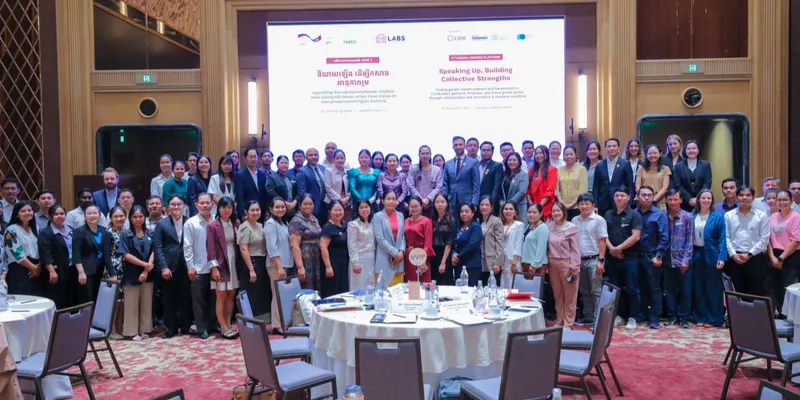
The 4th Annual Gender Platform convened over 80 representatives from government bodies, industry stakeholders, civil society organizations, brands, and trade unions to drive stronger action against gender-based violence and harassment (GBVH) in Cambodia’s garment, footwear, and travel goods (GFT) sector.
Held under the theme “Speaking Up, Building Collective Strengths: Ending GBVH in Cambodia’s GFT Sector Through Collaboration, Innovative and Inclusive Solutions,” the event emphasized that addressing GBVH is both a critical human rights issue and a cornerstone for sustainable economic growth in Cambodia’s largest export industry.
The platform was co-organized by GIZ-FABRIC Cambodia, the Life and Building Safety (LABS) Initiative, CARE Cambodia, the Responsible Business Hub Cambodia, and EuroCham’s Garment & Manufacturing Committee. It reinforced the importance of multi-sector collaboration, with senior officials from the Ministry of Labour and Vocational Training (MLVT) and the Ministry of Women’s Affairs (MoWA) joining factory leaders, worker representatives, and development partners to discuss policy reforms, survivor-centered responses, and the pivotal role of global brands in ensuring safer workplaces.
One of the key highlights of this year’s platform was the launch of the Women Empowerment Network (WE Network), an expansion of the successful WE House initiative. This network strengthens community-based approaches to GBVH prevention, creates safe spaces for women workers, and improves referral mechanisms for survivors. The event also featured innovative solutions such as grievance reporting platforms, GBV reporting apps, financial literacy initiatives, and joint campaigns led by local NGOs, unions, and brands.
The gathering also marked the signing of a new Memorandum of Understanding (MoU) between GIZ FABRIC Cambodia and the LABS Initiative, formalizing their ongoing collaboration to promote gender equality and workplace safety in the garment sector. This partnership reflects a shared commitment to scaling interventions that protect workers’ dignity and advance systemic change.
Voices from the Platform
- Her Excellency Sovann Vannaroth, Permanent Secretary of State, MLVT: “Eliminating gender-based violence and harassment in the workplace is a shared responsibility of all stakeholders, aimed at promoting labor rights and enhancing productivity.”
- Pramit Chanda, Global Director – Textile and Manufacturing, IDH, and LABS spokesperson: “Addressing complex challenges such as gender-safety requires collective action from all stakeholders – government bodies, industry leaders, civil society, and workers. By working together, we can build safer workplaces that empower workers and contribute to the long-term sustainability and growth of the sector.”
- Hasso Anwer, Project Director, FABRIC Cambodia, GIZ: “The annual Gender Platform provides a critical space for us to come together and develop approaches for Women Empowerment in the GFT industry and beyond. Addressing GBVH is not the responsibility of one actor alone; it requires an unwavering and shared commitment by all industry stakeholders. With our flagship initiative, WE House, and our newly launched WE Network, GIZ will continue supporting these efforts in collaboration with our partners.”
- Sinuon Hun, Technical Advisor for Advancing Women and Girls, CARE Cambodia: “Ending gender-based violence and harassment in Cambodia’s GFT sector demands bold collaboration—where government, civil society, and industry unite to drive survivor-centered, sustainable change. This Gender Platform gives us a crucial opportunity to continue the stakeholders’ commitment, investment, and collaborative aspiration toward gender equality and ending GBVH in the GFT sector in Cambodia.”
Building on the progress of previous platforms, participants reaffirmed the need for stronger reporting mechanisms, digital prevention tools, male engagement in promoting gender equality, robust legal enforcement, and increased brand accountability. The 2025 platform concluded with a strong call for unified training, systemic reforms, and industry-wide collaboration to transform Cambodia’s GFT sector into a safer and more equitable environment for all workers.