CAI Highlights Cotton Productivity, Quality and Market Development Priorities at 104th AGM
Association reviews policy advocacy, international cooperation, cotton quality initiatives and farmer-focused programmes for 2026-27
The Cotton Association of India (CAI) reviewed developments across the Indian cotton sector and outlined its priorities for the coming period at its 104th Annual General Meeting (AGM) held in Mumbai on September 29, 2026.
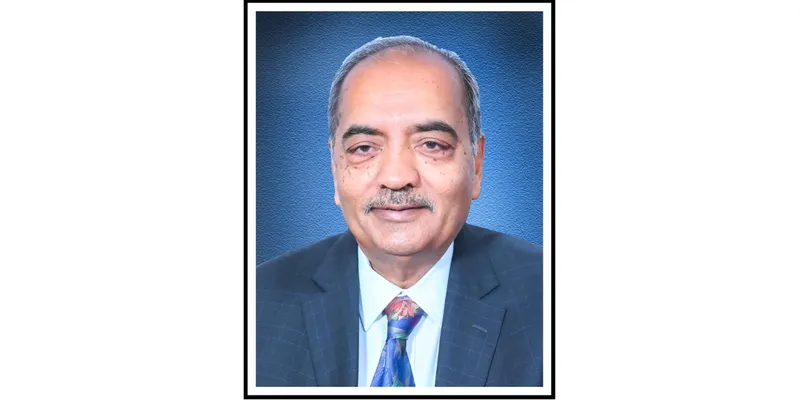
Addressing the AGM, Shri Vinay N. Kotak, President, CAI, said the current cotton season had been positive, by and large, for stakeholders across the value chain, including farmers, ginners, traders and spinners. He also expressed optimism about the future of Indian cotton, particularly in view of new market opportunities expected from the Free Trade Agreements concluded by the Government, which could generate additional demand for Indian textiles and cotton products.
Focus on Cotton Competitiveness
India remains the world’s second-largest cotton producer and consumer and accounts for around 20% of global fibre production.
According to the CAI President, improving cotton productivity, quality, contamination control, traceability, sustainability, price discovery and risk management will be important for strengthening the competitiveness of Indian cotton.
CAI Roadmap and Policy Advocacy
During the year, CAI strengthened its engagement with the Government and other stakeholders through its newly developed CAI Roadmap, which provides a structured framework for policy advocacy.
The Association pursued issues including Minimum Support Price (MSP)-related matters, removal of the Reverse Charge Mechanism (RCM) on purchases of cotton from farmers and other concerns affecting the cotton value chain.
CAI also advocated examination of a Bhavantar-type mechanism as an alternative or complementary approach to the existing MSP framework. The proposed approach aims to provide effective price support to farmers while allowing market forces to operate more efficiently.
A significant development highlighted at the AGM was the removal of import duty on cotton from June 1 to October 31, 2026, following representations made by CAI along with stakeholders across the cotton value chain.
CAI also welcomed the Government’s withdrawal of the Cotton Bales (Quality Control) Order (QCO) with effect from June 9, 2026.
The issue of RCM on kapas continues to be pursued. CAI led a delegation of ginners to the GST Council Secretariat in Delhi and continues to engage with the authorities for a practical solution addressing concerns of the cotton value chain.
The President also welcomed the constitution of a Committee under the Chairpersonship of the Textile Commissioner to formulate a scientific methodology, institutional framework and operational mechanism for assessing cotton demand and identifying suitable research and technical agencies to study various aspects of the cotton value chain.
International Cooperation and Market Development
CAI renewed its Memorandum of Understanding (MoU) with the International Cotton Association (ICA) and organised ICA Outreach Programmes at Ahmedabad and Coimbatore, bringing international expertise and perspectives closer to Indian cotton stakeholders.
The Association is also working towards an MoU with ABRAPA, Brazil, with the objective of facilitating cooperation and knowledge exchange in areas including productivity, sustainability, traceability and international cotton trade.
CAI has entered into a Letter of Engagement with NCDEX to strengthen cooperation in cotton futures, price discovery, hedging and risk management.
Work is also progressing on the proposed India Cotton Index, which is envisaged as a credible and representative benchmark for Indian cotton. The index is intended to provide greater transparency and support informed commercial decision-making.
Laboratory Upgradation and Cotton Quality
CAI has undertaken substantial upgradation of its laboratories and established the CAI Cotton Contamination Estimation Laboratory in Mumbai, a specialised facility for the identification and assessment of cotton contamination.
The initiative is aimed at strengthening cotton quality, improving marketability and supporting the broader objective of making Indian cotton more consistent, reliable and internationally competitive.
Farmer-Centric Initiatives
CAI continued to expand its field-level engagement, with farmers identified as a central part of the cotton value chain.
Pheromone traps and lures were distributed to farmers in Dondaicha for early detection of pink bollworm infestation, while neem seed oil was promoted in Chopda as an eco-friendly bio-pesticide.
Farmer awareness and training programmes were also conducted. CAI has conceptualised the Mobile Krishi School to take scientific knowledge and practical training directly to cotton-growing areas.
The Association also plans to work with the Government on a structured cotton productivity project, initially focusing on Maharashtra, with the objective of improving productivity and farmer incomes.
Learn with CAI Initiative
The Learn with CAI initiative was another development highlighted during the year.
Basic and Advanced programmes covering cotton quality assessment and advanced marketing tools were conducted and received an encouraging response. CAI intends to develop the initiative as a sustained platform for knowledge-sharing, skill development and dissemination of best practices across the cotton value chain.
CAI Priorities Ahead
Looking ahead, CAI’s priorities will include improving cotton productivity and farmer incomes, enhancing cotton quality and reducing contamination, promoting scientific and sustainable cultivation, strengthening market intelligence and risk-management mechanisms, expanding international cooperation, developing professional capacity through Learn with CAI, and continuing constructive, evidence-based policy advocacy.
Shri Kotak emphasised that CAI’s strength lies in bringing together farmers, ginners, traders, brokers, exporters, importers, textile mills, researchers, scientists, Government institutions and other stakeholders.
He called for continued collective efforts to build a more productive farmer, better quality cotton, a stronger cotton value chain and a more competitive India in the global cotton economy.