By 2026, the market for point-of-use water treatment systems will be valued USD 25.3 billion, growing at a 9.3% CAGR.
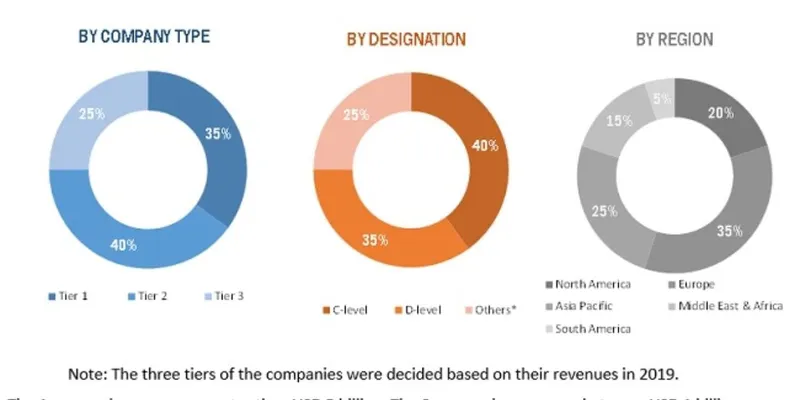
According to a new market research report, the "Point-of-Use Water Treatment Systems Market by Device (Tabletop, Faucet-mounted, Countertop) Technology (RO, Ultrafiltration, Distillation, Disinfection, Filtration), Application (Residential & Non-Residential) & Region - Global Forecast to 2026", market size is projected to grow from USD 16.2 billion in 2021 to USD 25.3 billion by 2026, at a CAGR of 9.3% from 2021 to 2026. The market is projected to grow in accordance with increasing demand for clean drinking water, increasing water contamination, growing human population, growing awareness about the benefits of water treatment, and technological innovations in the water treatment industry. Download PDF Brochure: https://www.marketsandmarkets.com/pdfdownloadNew.asp?id=131277828Browse
- 216 Market data Tables
- 47 Figures
- 214 Pages and in-depth TOC on "Point-of-Use Water Treatment Systems Market - Global Forecast to 2026"
This report also provides a comprehensive analysis of the companies listed below: Pentair PLC (UK), Honeywell International (US), Panasonic Corporation (Japan), Unilever PLC (UK), LG Electronics (South Korea), Coway Co. Ltd. (South Korea), Best Water Technology AG (Austria), Toray Industries (Japan), amongst others.
Request Sample Pages: https://www.marketsandmarkets.com/requestsampleNew.asp?id=131277828
In terms of value & volume, counter-top is estimated to lead the point-of-use water treatment systems market in 2020 Based on device, counter-top units are projected to be the largest segment in the point-of-use water treatment systems market. Counter-top units are also known as on-counter filters. These filters sit on the counter and are directly connected to the faucet. They consist of a diverter, allowing users to switch between unfiltered and filtered water. Counter-top units operate on reverse osmosis as well as activated carbon technologies. These filters reduce contaminants, such as bacteria, dirt, chlorine, particulates, rust, lead, mercury, sediment, copper, benzene, cadmium, and cysts. The major advantage of counter-top units is that they do not require frequent filter changes. However, they require some plumbing. Counter-top units do not chill water, unlike pitcher water filters. The APAC region is projected to account for the largest share in the point-of-use water treatment systems market during the forecast period. The APAC region is projected to lead the point-of-use water treatment systems market in term. The growing population in these countries presents a huge customer base. The growth of these industries is backed by the increasing public and private sector investments, increasing population, growing economy, and high disposable incomes of both value and volume from 2021 to 2026. Growing population and rapid urbanization are among the key factors propelling industry expansion in the region, during the forecast period. Inquire Now: https://www.marketsandmarkets.com/Enquiry_Before_BuyingNew.asp?id=131277828 Trending Plastics Industry Reports