Bureau of Indian Standards: Pioneering Standards and Quality in the Geosynthetic Sector
Authors:
Shri J. K. Gupta, Scientist-E/Director & Head, Textile Department, BIS
Shri Himanshu Shukla, Scientist-C/Deputy Director, Textile Department, BIS
The Quality Guardians: BIS's Role in Nation-Building
The Bureau of Indian Standards (BIS), under the Ministry of Consumer Affairs, Food and Public Distribution, Government of India, serves as the National Standards Body and a key pillar of India’s quality infrastructure. BIS develops Indian Standards, operates certification schemes, hallmarking and product, operates the Compulsory Registration and Management Systems Certification Schemes, and provides laboratory recognition and training on standards and quality.
Through its core activities of standardization and conformity assessment, BIS contributes significantly to the national economy by ensuring the availability of safe, reliable, and quality products, minimizing health hazards, protecting the environment, promoting exports and import substitution, and controlling unnecessary proliferation of varieties. These initiatives not only benefit consumers and industry but also support public policies on product safety, consumer protection, food safety, environmental sustainability, and infrastructure development.
A Strategic Focus on Technical Textiles
The Textile Division Council (TXDC) of BIS spearheads standardization in the textile sector through 27 technical committees, covering both conventional and technical textiles. The division has an impressive portfolio of over 1,600 standards, covering a wide spectrum from cotton, wool, silk, jute, khadi and textile machinery and the rapidly advancing field of technical textiles.
Recognizing the growing importance of technical textiles in industrial applications, BIS has established specialized committees for fast-track standardization in segments like Agrotech, Medtech, Packtech, Geotech, Buildtech, Indutech, Composites, and Speciality Fibres. To date, the department has developed nearly 600 standards in the field of technical textiles, supporting innovation and industry growth.
Geosynthetics: Strengthening the Foundation of Infrastructure
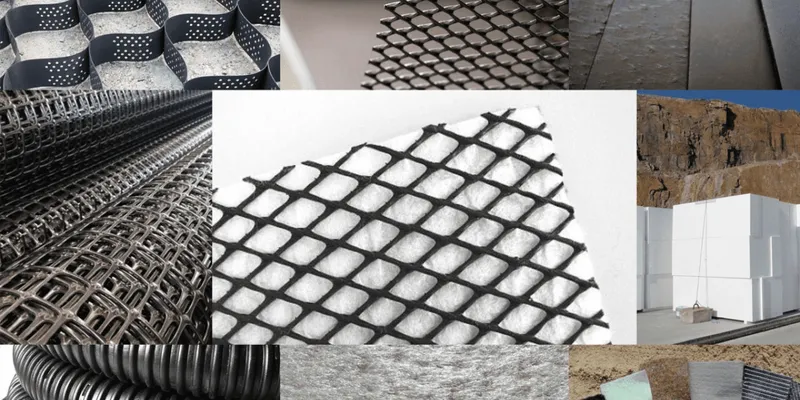
Geosynthetics have evolved as a cornerstone of modern infrastructure development. They are made from polymer materials like high density polyethylene, polypropylene, polyester, polyamide, polyvinyl chloride, or from natural textile material like jute and coir, and are used in the construction of roads, railways, landfills, drains, harbor works, dams and breakwaters, and many other civil engineering applications.
This sector has been experiencing steady growth, driven by the need for durable and cost-effective construction materials, and increased focus on sustainable and climate-resilient solutions. Their ability to strengthen soil, prevent erosion, and extend the life of structures makes them indispensable in modern engineering.
BIS plays a key role in shaping the quality framework for India’s growing geosynthetics industry. Standardization in this field is led by the Geosynthetics Sectional Committee, TXD 30, under the Textiles Division Council of BIS. This committee develops Indian Standards that pertains to the products, test methods, code of practice, terminology, classification and specifications for both woven and non-woven geosynthetics used in various civil engineering and infrastructure applications.
So far, the committee has published 76 standards, including 21 product standards, 8 codes of practices, and 42 test methods, along with several other documents. Together, these standards provide a strong foundation for ensuring that every geosynthetic product compliance with the standard meets the highest benchmarks of quality, performance, and safety facilitating engineers, manufacturers, and policymakers to build infrastructure that’s stronger, safer, and built to last.
BIS has published several important Indian Standards on products such as geotextiles, geocells, geogrids, geomembranes, geostrips, prefabricated vertical drains and polymer rope gabions etc.
Among these, geotextiles are versatile, permeable woven or nonwoven fabrics widely used in civil engineering works. BIS has published, IS 16362:2024, specifying requirements for geotextiles used in critical applications including subsurface drainage, subgrade separation, stabilization, filtration, and erosion control within hard armor systems. This standard categorizes geotextiles into five distinct classes: three for highways and erosion control (Class 1H to 3H) based on survivability conditions from severe to mild, and two dedicated classes (1R and 2R) for railway applications. Similarly, IS 16090:2013, specifies the geotextiles having mass per unit area ranging from 300 to 1200 GSM used for cushioning applications.
Geocells and geogrids are key geosynthetic products used to reinforce soil and enhance the load-bearing capacity of pavements and soil retaining structures. IS 17483:2020 (Parts 1 & 2) specifies HDPE geocells for load-bearing and slope protection applications respectively, while IS 17371:2020 and IS 17373:2020 cover geogrids for flexible pavements and reinforced soil walls respectively. Likewise, IS 17372:2020 covers PET-based geostrips having tensile strength, ranging from 20 kN to 100 kN and used for retaining wall reinforcement and stability improvement.

Geomembranes are impermeable polymer liners used for seepage control and containment in structures like landfills, canals, reservoirs, and effluent treatment plants. BIS has specified their requirements in IS 15909:2020 for PVC geomembranes, IS 16352:2020 for HDPE geomembranes, and IS 17374:2020 for reinforced HDPE membranes.
Recently, BIS brought two standards on innovative products, IS 19104:2025 on Geotextile Tubes used for riverbank protection, sludge dewatering, and coastal works, and IS 19218:2025 on Coir Nonwoven Stitched Composite Geotextiles used for erosion control applications which acts as a barrier between soil surfaces and rainfall.
Considering the broader global movement towards eco-conscious and green technologies, the technical committee on geosynthetics has formulated exclusive standards IS 14715 (Part 1& 2):2016, IS 14986:2001 and IS 15869:2020 on jute and coir geotextiles which finds their application in rural and unpaved roads for erosion control and reinforcement applications.
IS 14715 (Part 1) specifies woven (724 GSM) and non-woven (500 GSM) jute geotextiles designed for strengthening subgrade layers in road construction, while IS 14715 (Part 2) covers treated woven JGT (627 GSM) for erosion control at riverbanks, slopes and waterways. Further, IS 14986:2001 classifies jute geotextiles into three categories Type 1 (730 GSM) for high-rainfall and rocky terrains, Type 2 (500 GSM) for sandy-silt soils with some clay, and Type 3 (292 GSM) for sandy or clayey soils ensuring appropriate selection based on site conditions.
Apart from this, BIS is proactively working on important subjects like drainage composite, geosynthetic clay liner, cementitious composite mats etc. that are gaining wide adoption in a variety of engineering and infrastructure applications.
Standards play a vital role in facilitating trade and improving market access, particularly when harmonized globally to eliminate technical barriers. In line with this vision, BIS plays an active role as a participating (P) member in several international standardization committees. Notably, BIS holds P-membership for ISO/TC 221 on Geosynthetics, contributing significantly to the formulation of international standards and harmonization of standards in this domain. A majority of BIS test method standards for geotextile products are already harmonized with their ISO counterparts, ensuring international equivalence and strengthening India’s footprint in the global geosynthetics market.
To strengthen the quality ecosystem in the country, the Ministry of Textiles has issued Quality Control Orders (QCOs) under the BIS Act, 2016, mandating BIS certification for 20 geosynthetic products. These include Geocells, Geotextiles, Geogrids, HDPE and PVC Geomembranes, Geostraps, and Jute and Coir Geotextiles, among others. The aim of the QCO is to prevent the production and import of substandard products while simultaneously promoting safety and reliability.
In a significant stride, BIS has launched the eBIS portal (www.manakonline.in) as a centralized platform for its wide-ranging activities, including standards formulation, conformity assessment, hallmarking, testing and training. This initiative brings the entire ecosystem of standardization and conformity assessment from standards formulation and laboratory services to training and hallmarking under one unified digital roof. The portal also streamlines standardization process like committee management and public consultation, allowing stakeholders to submit proposals, comment on drafts, and access standards through a centralized system. This digital overhaul marks a pivotal shift towards a more agile, inclusive, and efficient standards-making body, empowering industry and citizens alike.
Future of Geosynthetics in Construction
As India navigates an era of rapid development, urbanization, and climate challenges, the demand for advanced geosynthetic materials is set to surge. At the helm of this transformation, the BIS is ensuring the nation's growth is built on a foundation of quality and standards. Through its robust framework of well-defined standards, global harmonization, and effective implementation, BIS is empowering the creation of safer, resilient, and more sustainable infrastructure. By championing reliable, high-quality, and eco-friendly materials, BIS is not just steering the geosynthetics industry toward global competitiveness, it is embodying the nation's vision of 'Zero Defect, Zero Effect' and laying the groundwork for a self-relient India.