Building Hopes and Dreams Through the Textile Sector: Rebuilding Sri Lanka's North
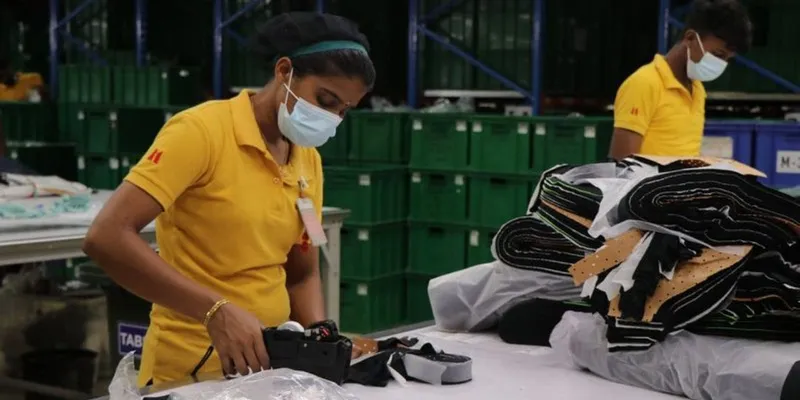
One of the first sectors to join the Northern Province after the Sri Lankan civil war ended in 2009 was the garment industry in an effort to inject much-needed capital into the community's reconstruction. After more than ten years, the garment industry is still the only significant manufacturing sector to have established significant operations in the north, employing more than 8000 people. Among them are Dianna, Durkadevi, and Harshani, who have worked hard for nearly ten years in reputable northern apparel manufacturing enterprises. They discuss their aspirations, growth as people, prospects realised, and how finding work in the apparel industry has made a bright future possible. Kilinochchi and the surrounding area are around 340 kilometres from Colombo, the capital city of Sri Lanka. A thirty-year civil war that had been raging in Vavuniya ended in 2009. While this led to socio-economic difficulties following the war, it was urgent to rebuild the community's means of subsistence. This opened the door for businesses like MAS Kreeda Vaanavil, Omega Line Vavuniya, and Hirdaramani Industries, who were among the six businesses to enter the Northern Province, to create jobs in the war-torn area and inject more money into the economy by recognising the crucial role the sector plays in the development of the nation.Setting up business in a remote area is no easy task. At least three years passed before factories could start operating. However, it has had a significant impact on communities and employment. More than 80% The percentage of women working in these factories has risen over time, reflecting the overall rise in women's participation in the labour force. Many of these women were beginning their careers in formal employment for the first time. This highlighted the necessity of implementing policies that empower women and open up new avenues for achieving financial independence. The industry already had a track record of shifting plants out of congested Industrial zones to more remote places, making the creation of a workspace that addresses the well-being of its employees and environment another crucial issue. Greenfield sites are chosen for the construction of manufacturing facilities with a focus on environmentally friendly practises and minimising the impact of the sector. establishing LEED-certified buildings, utilising renewable energy sources like biomass, and Northern manufacturers have come a long way to go beyond just complying with legal frameworks and integrating sustainability into their core operations. This journey has involved solar energy, responsible chemical use, and achieving zero hazardous status in all goods and processes. These businesses' exports, which are mostly to the EU, are eligible for the EU's GSP+ programme. Sri Lanka will have to reapply for the new programme, which starts in 2024, when the existing programme expires in 2023. GSP+ is a vital component of the expansion strategies of many businesses in the north and east, notably for the workforce that makes clothes primarily for the European market. These factories serve as evidence of the success of the strategy, which has since helped these communities in a way that no other sector has. Women's empowerment MAS Kreeda Vaanavil, whose name refers to the "Rainbow" that is frequently associated with optimism, currently employs more than 2000 people in the Northern Province. The firm opened its doors in 2012 and currently exports more than 80% of its goods via the GSP+ programme, producing more than eight million pieces yearly for its core market in Belgium1. "Empowering Women" was designated as a stand-alone pillar of the MAS 2025 Social Sustainability Strategy. Women Go Beyond (WGB) and other initiatives have been crucial in ensuring career growth and skill development for this pillar.2 As part of the business's journey towards sustainable systematic change, 100% of the factory floor's workers must be women. For MAS Holdings, creating meaningful employment and providing world-class workplaces have been core values. This dedication could be seen on the manufacturing floor, where women like Dianna—a Jaffna native who has worked for the company for almost ten years—were given prospects for advancement as single mothers. She started out as a sewing operator and is now a team leader with seventy employees. The future of my family and I would have been in doubt if Kilinochchi did not have factories like this. Even though I didn't finish school, my supervisors trained me on how to use a sewing machine when I first started in the field, and they gave me the chance to advance. I enrolled the business at a crucial juncture in my life when I didn't even have a job. I was motivated to realise that I, too, could be financially independent after observing how the women were working here. With a smile, she declares, "This is hope. prospects for cross-collaboration and education The Northern Province's Omega Line, which started running in Vavuniya in 2013, travels further south. Over 2600 people rely on the company for their livelihoods, with more than 88% of them being women. Under the GSP+ programme, the garment company produces about 34 million items annually3. The company's heart and soul are women from the area, which has allowed Omega Line to lead various projects for female emancipation, some of which offer prospects for advancement. operators to get into management. Omega Line offers its personnel the chance to participate in cross-collaboration training at its headquarters in Verona, Italy, a special initiative provided to chosen factory-level staff. Calzedonia is Omega Line's parent business in Italy. Durkadevi, one of the few female technicians at Omega Line, lives close to the facility with her mother and sister. She is excited to fly to Italy to visit the parent company and receive more training there. Her entry into the clothing industry was marked by introspection. She claims that despite having started out as an auditor, she switched to the technical department when her manager recognised her aptitude in this field. "When I first entered the facility, I convinced myself that this opportunity is for me. I came with hopes and dreams that one day I would be able to put food on the table without difficulty or buy new clothes, which I had not been able to accomplish in the past. But I never imagined that I would have the chance to travel abroad for training possibilities that would expose me to learn skills from nations like Italy," she exclaimed with pride. fostering equality of opportunity Hirdaramani Fashions (Pvt.) Limited began operations in 2012 and is a firm that emphasises women's empowerment initiatives. It is situated a short distance from Vavuniya Town. The abandoned structure once had numerous gunshot holes from the battle. The structure is now a cutting-edge facility housing more than 1400 workers who produce more than Every month, 2.5 million pieces. Under the GSP+ programme, 80% of the items are shipped to the EU. The "Wonders of Wellbeing" (WOW) initiative is an all-encompassing approach that incorporates wellbeing into the business agenda and culture, which has a primarily female staff. It encompasses a wide range of techniques and efforts to generate demonstrable impact and is built on five major pillars: mental, relational, physiological, economic, and environmental. The company also chooses wellbeing champions to integrate health into the organisational culture by advocating it everyday at the factory level, in addition to providing training resources, enhancing financial literacy among employees, and establishing fair employment chances. As a recorder in the cutting department since the factory's inception, Harshani Priyarathne claims firms like Hirdaramani have Despite the fact that she was unable to finish her Advanced Levels due to financial constraints, this provided her with learning opportunities. Her husband has also been employed at the factory for more than two years as a store supervisor, which has provided both of them the chance to advance and earn a reliable income to care for their child. "I always say the factory is like a campus, where you are allowed to learn various skills in apparel manufacturing compared to other industries," Harshani said. "There was only one building at Hirdaramani Industries when I started working there. To learn Enterprise Resource Planning (ERP) for use in the Vavuniya factory, I was moved to Colombo, where I also instructed my coworkers. This was excellent. I had a learning experience that provided me the self-assurance to start a career in the clothing industry. I'm now pursuing a diploma in clothing management since I want to work in management. Because the apparel industry makes an immeasurable contribution, I am proud of the work I do. No of your qualifications, there are chances in the apparel industry for everyone, I usually say. Although Dianna, Durgadevi, and Harshani stumbled into the apparel industry, it opened doors for professional development and educational opportunities. In the Northern region, where women are given the financial freedom to assist families and realise their potential, there are hundreds of stories like theirs. To make the North's full potential known to deserving women like them, calls for coordinated action from the government and key stakeholders. This entails fostering existing ties with EU nations even further and utilising GSP+'s advantages to promote trade and the growth of the entire community.