BTMA Members Advance Technical Textiles Through Digitalisation, Composites and Testing Innovation
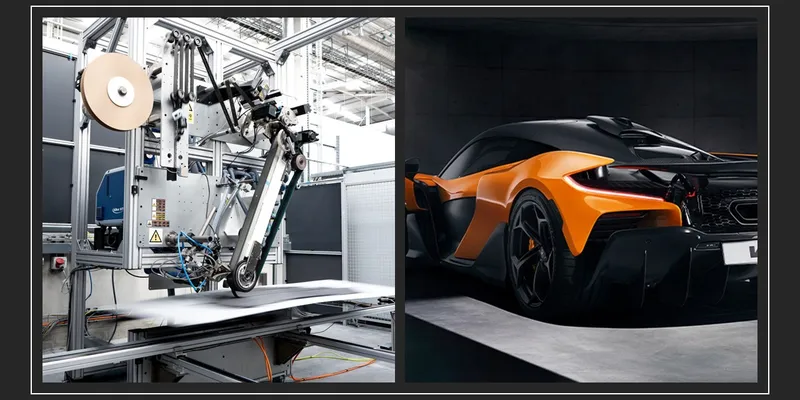
Despite ongoing market volatility, members of the British Textile Machinery Association (BTMA) recorded a year of measurable progress in 2025, marked by technological developments in technical textiles, process automation, composites manufacturing and advanced testing. The association reports continued investment in innovation, reflecting steady momentum across both domestic and international markets.
BTMA members reported strong levels of activity in 2025, resulting in new machinery solutions for technical fibre and fabric production, wider adoption of artificial intelligence in process control, and notable improvements in materials testing and quality assurance. According to BTMA Chief Executive Jason Kent, these developments position the sector for further progress in 2026, with upcoming industry events such as JEC Composites in Paris and Techtextil Frankfurt expected to provide additional platforms for collaboration and market engagement.
-800x1000.webp?2026-02-25T09:16:46.141Z)
BTMA CEO Jason Kent.
Progress in composites manufacturing
Among the year’s developments, Cygnet Texkimp received a nomination for a 2026 JEC Innovation Award for its collaboration with McLaren Automotive on the ART rapid tape-deposition system. The technology enables dry fibre tapes to be laid at speeds of up to 2.5 metres per second, improving accuracy, reducing material waste and shortening production cycles. The system is already being applied across McLaren’s composite-intensive vehicle programmes.
Cygnet Texkimp also designs and manufactures prepreg production equipment and composite handling systems. In addition, it is licensed to produce the DEECOM® composite recycling system, developed by Longworth Sustainable Recycling Technologies, which uses pressolysis with pressure and steam to recover fibres and resin polymers from composite waste with low emissions.
Other BTMA members contributing to the composites segment include Emerson & Renwick, supplying printing, forming and coating technologies for carbon fibre processing, Airbond, specialising in pneumatic yarn splicing for carbon and aramid fibres, and Slack & Parr, which provides precision gear metering pumps for manmade fibre production.
Efficiency gains in gel spinning
Advances in high-performance fibre production were also reported by Fibre Extrusion Technology (FET), which introduced a new gel spinning process for ultra-high molecular weight polyethylene (UHMWPE). The patented system uses supercritical carbon dioxide for solvent extraction, offering improved flexibility compared to conventional large-scale systems. The newly developed FET-500 series is designed for laboratory and small-scale production, supporting faster development of new fibre grades.
Digitalisation of quality assurance
Quality control has increasingly shifted towards automated and data-driven solutions. Shelton Vision expanded the capabilities of its WebSpector fabric inspection system, enabling real-time defect detection on complex patterned and distorted fabrics. The system now supports applications beyond automotive interiors and airbags, including performance wear, fashion, denim, upholstery, mattress fabrics and carbon fibre materials.
Continuous colour monitoring
A similar transition from periodic checks to continuous monitoring has taken place in colour management through C-Tex systems. By integrating inline colour measurement with defect detection, manufacturers can now assess colour variation directly during production. This data is shared downstream, allowing garment, furniture and automotive manufacturers to verify colour consistency and quality before further processing.
Advances in textile testing
Testing technology remains a key area of development. James Heal introduced new performance testing systems focused on simplified operation and reduced resource consumption. Its TruRain water repellency tester lowers water and energy use, while the newly launched Martindale Motion enables independent testing across nine stations, allowing multiple abrasion and pilling tests to run simultaneously.
Colour measurement accuracy has also improved through VeriVide’s DigiEye system, which offers non-contact colour assessment with LED illumination, controlled lighting geometry and automated image capture.
-800x450.webp?2026-02-25T09:16:46.758Z)
2025 saw data-driven developments from BTMA members including James Heal, Roaches International, Shelton and Virivide.
Objective assessment of fabric handle
Addressing long-standing challenges in evaluating fabric tactility, Roaches International introduced the Sentire fabric handle tester. The system provides objective measurements of properties such as softness, smoothness, stiffness and drape, reducing reliance on subjective assessment and physical sample exchange across supply chains.
Converging technologies shaping the future
According to Jason Kent, a clear convergence is emerging across BTMA membership, combining advanced machinery, intelligent software and precise testing. These developments address efficiency, sustainability and quality requirements while supporting a more transparent and resilient textile manufacturing ecosystem.
Founded in 1940, the British Textile Machinery Association represents UK textile machinery manufacturers worldwide and supports engagement across an increasingly diverse range of textile and industrial sectors.