Brandenburg’s Textile Industry Embraces Circular Innovation
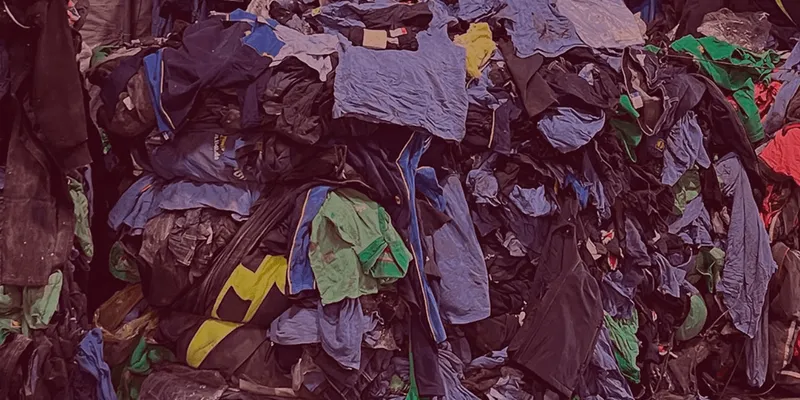
Brandenburg explores circular textile economy opportunities through policy recommendations from Fraunhofer IAP and Beneficial Design Institute.
A new policy paper titled “Closing the Loop in the Textile Industry: Value Creation in the State of Brandenburg” outlines how circular textile systems can transform the region’s economy and sustainability goals. Developed from the TexPHB feasibility study, it explores integrating textile waste into new value chains and advancing eco-innovation across Brandenburg.
Circular Economy Potential for Brandenburg’s Textile Sector
The joint policy paper by Fraunhofer Institute for Applied Polymer Research IAP and the Beneficial Design Institute investigates how the state of Brandenburg can strengthen its economy through a circular textile industry. Drawing from the TexPHB feasibility study, funded by the Brandenburg Ministry of Climate Protection, it highlights strategies to convert textile waste into valuable resources and stimulate regional value creation.
The textile sector is among the most resource-demanding industries, generating vast amounts of waste and emissions. In 2020 alone, the European Union produced around 6.95 million tonnes of textile waste, while globally, nearly 92 million tonnes end up in landfills or incinerators each year. Particularly challenging is the recycling of polyester-blended waste from fast fashion, workwear, and industrial cleaning textiles. Aligning with the EU’s Circular Economy Strategy, the study promotes circular processes as a pathway toward sustainable textile production.
From Research to Policy Impact
In this collaborative study, Fraunhofer IAP, Beneficial Design Institute GmbH, and matterr GmbH (formerly RITTEC 8.0 Umwelttechnik GmbH) explored innovative methods to transform polyester-based textile waste into polyhydroxybutyrate (PHB), a biodegradable bioplastic.
Dr. Tim Seedorf, Head of Research & Innovation at matterr GmbH, explained:
“With our innovative matterr process, we recover the monomers terephthalic acid (TA) and ethylene glycol (EG) in virgin quality from polyester-containing textile waste – suitable for the production of new polyester.”
Adding to this, Dr. Maren Wandrey, biochemist at Fraunhofer IAP, noted:
“We have also shown that the ethylene glycol obtained can be converted into the biopolymer PHB with the help of bacteria.”
An assessment by the Beneficial Design Institute confirmed that creating a textile innovation hub in Brandenburg could significantly bolster the regional circular economy, establish new value chains, and enhance the sustainable utilization of textile waste. The findings were further distilled into policy recommendations aimed at supporting decision-makers in Brandenburg.
PHB: A Bioplastic with Broad Benefits
PHB—a biodegradable, resorbable, and biocompatible bioplastic—offers numerous advantages for both the environment and economy.
According to Professor Friederike von Wedel-Parlow of the Beneficial Design Institute:
“PHB combines ecological advantages with economic potential in new markets. Our research has shown that designers, scientists, and industry can jointly develop solutions that harness these advantages for society and the economy, turning ecodesign thinking into a success story, also for Brandenburg.”
PHB’s versatility allows for applications in areas where materials interact with natural ecosystems or the human body, such as geotextiles, erosion control, shoreline reinforcement, tree protection, and medical sutures.
Strategic Path for a Circular Textile Economy
The policy paper proposes a multi-phase action plan consisting of six strategic recommendations to lay the groundwork for a circular textile economy in Brandenburg.
Clima State Secretary Dr. Haase stated:
“The goal is to retain value creation in the region, establish qualified jobs, and position Brandenburg as a model region for this EU initiative. The project consortium’s policy paper and preliminary study results contribute to bringing together ecological sustainability and economic strength in Brandenburg.”
The study also holds cross-border relevance, offering collaboration opportunities with Poland and the Netherlands. Through these partnerships, Brandenburg can solidify its role as a leader in the European circular economy, advancing design-led value chains and sustainable growth.