bluesign outlines enzyme dust safety practices for textile manufacturing
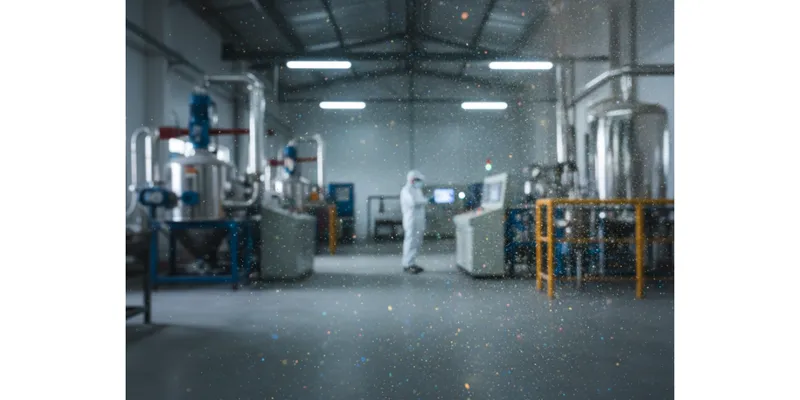
Enzymes are proteins that can act as respiratory sensitizers when inhaled. Repeated exposure may lead to respiratory allergy or asthma if risks are not properly controlled. Solid enzyme products, especially fine powders, can release airborne particles during handling activities such as dosing, transfer, and mixing.
The tendency of a product to release airborne particles is referred to as dustiness. Guidance from the Association of Manufacturers and Formulators of Enzyme Products (AMFEP) identifies dustiness and enzyme concentration as key factors influencing inhalation exposure. Exposure occurs not because enzymes are inherently unsafe, but because airborne release can happen during routine industrial handling, particularly when dusty formulations are used.
Although enzymes have been used safely in sectors such as detergent manufacturing for decades, safety practices for managing airborne exposure in textile production remain uneven. Industry guidance notes that effective risk management requires more than personal protective equipment alone. Process design, engineering controls, worker training, and workplace hygiene are also necessary elements.
In many textile facilities, especially smaller operations or those operating under limited regulatory oversight, ventilation systems and exposure monitoring may not be consistently implemented. In such settings, reliance on downstream controls can make exposure management difficult in practice. AMFEP guidelines therefore recommend a step-by-step framework for risk assessment and control throughout the value chain, including criteria for air measurements and additional preventive actions.
Upstream decisions on product form and formulation play a significant role in reducing occupational exposure. Industry guidance highlights that product design affects dustiness and aerosolization potential. Liquid enzyme formulations and encapsulated granules are less likely to generate airborne dust than fine powders, as they reduce the handling stages where inhalation exposure commonly occurs. This reflects a broader chemical management principle that upstream product choices can strongly influence real-world exposure risks.
Worker safety considerations also intersect with quality and operational performance. Powder-based enzymes may dissolve unevenly in water, creating localized areas of high concentration that can lead to inconsistent treatment effects such as streaking, frosty appearances, or fabric damage. These inconsistencies may increase rework and waste. Liquid enzyme formulations enable more uniform dosing and are compatible with automated and closed-system applications, supporting both exposure reduction and process stability.
Across much of the global textile industry, enzyme safety practices have not yet fully aligned with approaches established in other industrial sectors. The use of product formats and control strategies based on a hierarchy of controls remains limited. Voluntary systems and industry guidance contribute to narrowing this gap. AMFEP has issued enzyme safety guidance specifically for textile processing that sets out recommended exposure management practices.
Certification bodies also influence the adoption of lower-risk product formats. More than a decade ago, bluesign identified airborne enzyme dust as an occupational health concern and incorporated this into its system requirements. As a result, powder enzyme products are not permitted in the manufacturing of bluesign® APPROVED materials or bluesign® PRODUCT. This policy is based on upstream risk assessment rather than reliance solely on downstream testing.
To support implementation, the bluesign System provides transparency on chemical inputs through tools such as the bluesign Finder, which enables manufacturers and brands to identify enzyme formulations that meet these requirements. This links risk identification with access to alternative inputs designed to reduce exposure potential.
“The occupational health risks associated with enzyme dust have been well understood for many years,” says Petr Valenta of bluesign Academy. “Fine enzyme powders can become airborne during handling, and inhalation exposure can lead to respiratory sensitization. Because controlling this exposure is often difficult in real production environments, bluesign addressed this risk early on by mandating the use of liquid enzymes as an alternative to the use of the powdered ones.”
By applying verified data and established industry guidance, system-based approaches aim to shift enzyme safety management from reactive compliance to preventive risk control, supporting worker protection alongside environmental and operational objectives.