Biotextile Processing: How Fashion Is Learning to Grow Its Fabric Instead of Weaving It
Tanvi Munjal
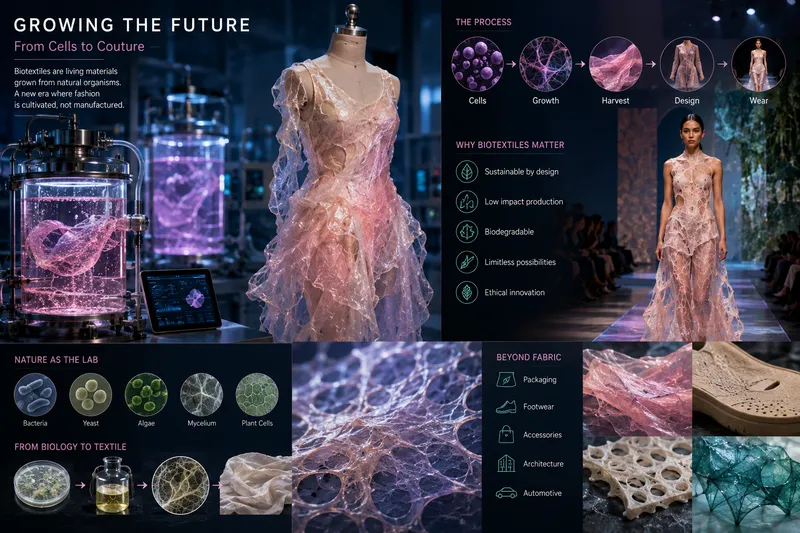
Picture a fabric that isn’t spun, knitted, or woven. It is grown, typically in a shallow tray or custom vessel under controlled conditions, over a period of days to weeks. That is the idea behind biotextile processing, and it is becoming one of the most discussed shifts in textile manufacturing today.
So What Exactly Is a Biotextile?
In simple terms, a biotextile refers to textiles or leather-like materials produced through biological processes or from biological sources — using living organisms such as fungi, bacteria, or algae, or derived from plant waste — as alternatives to petroleum-based synthetics or traditional animal hides.
The category is broad, so it helps to split it into three buckets:
Type | What It’s Made From | Example |
Natural bio-based | Plant fibres (mechanically extracted) such as hemp, linen, or agricultural by-products like pineapple leaves | Piñatex (pineapple leaf fibre) |
Semi-synthetic / Regenerated bio-based | Cellulose chemically regenerated from wood pulp or other plant sources | Lyocell/Tencel |
Biofabricated | Grown directly by microorganisms (bacteria, fungi, algae) | Mycelium leather, bacterial cellulose sheets, algae-based yarns/films |
Fashion academics and industry experts often group these into natural biomaterials, semi-synthetic/regenerated bio-based materials, and biosynthetic or biofabricated materials such as mycelium, SCOBY-derived bacterial cellulose, and microbial proteins. The buzziest of the three, and the one this article focuses on, is biofabrication — because it’s genuinely new manufacturing, not just a different raw material.
On the money side: the global bioplastic textiles market was valued at around $900 million to $940 million in the early 2020s and is projected to grow at a CAGR of approximately 4–12%, depending on the source, with forecasts reaching the low billions by 2032–2033. More specifically, mycelium leather markets are emerging rapidly, with some projections estimating growth into the hundreds of millions by the early 2030s. Worth noting: some market reports lump in “biotextiles” used for surgical mesh and implants, which is a completely different industry — so treat big round numbers with caution.
How It’s Actually Made
This is where biotextile processing gets genuinely interesting and different from any textile process that came before it.
1. Mycelium (Mushroom) Leather
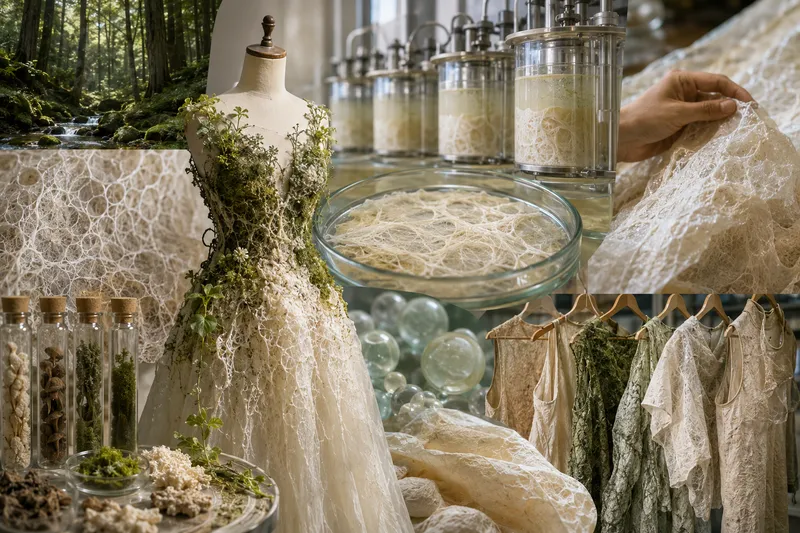
Fungal spores are inoculated onto agricultural waste like sawdust, then grown in mould-based cultivation under controlled temperature (20–30°C) and humidity (80–95%) for 5 to 21 days, though some processes produce foam-like mycelium mats in as little as 4 to 9 days. Instead of being woven or knitted, the fungal hyphae actually grow together into a cohesive sheet — a genuinely new class of material. Once harvested, the sheet is heat-inactivated to lock in its final properties, then sent to a tannery for dyeing, embossing, and finishing — much like real leather.
2. Bacterial cellulose
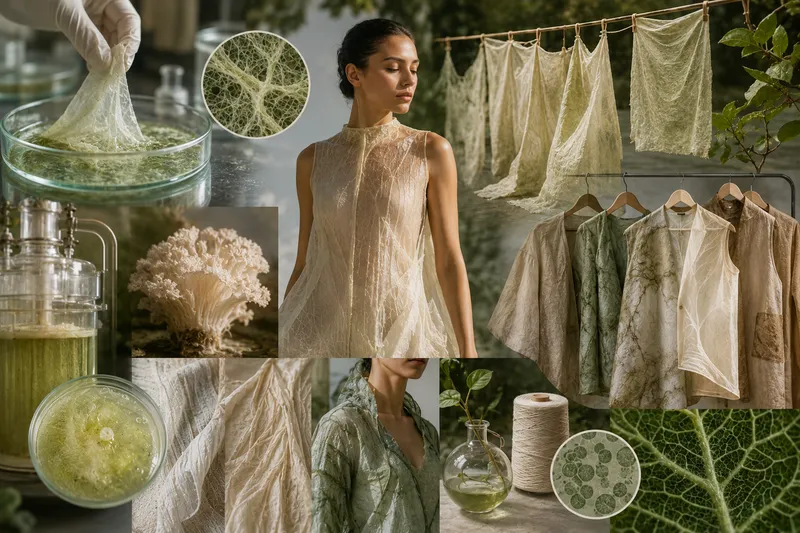
Here, bacteria do the weaving. A bacterial culture (commonly Komagataeibacter xylinus) is fed a sugar source — anything from black tea to sour whey, apple juice, or brewer’s spent grain — sterilised in an autoclave, then left to ferment statically, forming a jelly-like sheet on the surface over one to two weeks. This gelatinous sheet is a genuine 3D nano-fibrous network that’s then washed, treated, and dried into a leather-like material. Some processors now use chrome-coordination “tanning” techniques adapted from traditional leather-making to improve its water resistance.
3. Fibre-Based Biotextiles (Like Piñatex)
These start with agricultural waste. Pineapple leaves left over after harvest are collected, and fibres are extracted, washed, sun-dried, purified, and then mechanically processed into a felt-like base called Piñafelt, which is finished into rolls of durable textile.
4. Finishing and Machinery
Across all three routes, the equipment overlaps with conventional processing at the finishing stage — hydraulic presses, tanning drums, dryers, and lamination lines. On the lab-scale-to-pilot side, specialised gear also shows up: researchers have used equipment like the Lab Wizz 320 micro ball mill from Laarmann Group (Netherlands) to blend cellulose composites, alongside standard bioreactors and climate-controlled growth chambers that regulate temperature and humidity for fungal or bacterial cultivation.
Who’s Actually Using It
Company | Country | What They Make |
MycoWorks | USA | Reishi (fine mycelium leather); supplies Hermès, GM, Ligne Roset |
Bolt Threads | USA | Mylo mycelium leather (production paused since 2023) |
Ananas Anam | Philippines/UK | Piñatex pineapple leather |
Mycotech Lab (MYCL) | Indonesia | Mylea mycelium leather |
Keel Labs | USA | Kelsun, seaweed-based yarn/fiber |
TômTex | USA | Leather-like material from coffee grounds & shellfish waste |
Phool.co | India | Fleather from temple flower waste |
MycoWorks opened its commercial-scale Fine Mycelium factory in Union, South Carolina, in September 2023. It is designed to produce millions of square feet annually, with partners including Hermès, Ligne Roset, and General Motors. Reishi currently costs around $25 per square foot — roughly on par with premium animal leather.
On the Indian front, IIT Kanpur-backed Phool.co has developed Fleather using its flowercycling technology. It turns temple floral waste into a leather alternative and has received recognition, including a PETA innovation award — a strong India-specific entry into this space.
SWOT Snapshot
Strengths | Weaknesses |
Biodegradable, low water use, reduced toxic tanning chemicals | Still costlier at commercial scale; long-term durability data still emerging in real-world use |
Grows in days/weeks, versus years for livestock | Some materials can be brittle or moisture-sensitive without proper finishing |
Opportunities | Threats |
Strong brand pressure to reduce carbon footprint (animal leather is a major emissions driver in luxury) | Funding remains challenging — Bolt Threads paused Mylo in 2023 |
EU and global regulations pushing sustainable and traceable sourcing | Slow consumer awareness and price sensitivity in mass markets |
Bolt Threads paused Mylo production in 2023 (with operations later suspended), serving as a reminder that while the science is maturing rapidly, the industry is still navigating financial and scaling hurdles.
The Real Talk: Costs, Acceptance, and What’s Next
Consumers like the idea more than they understand the reality — most still don’t know mycelium leather from plastic ‘vegan leather.’ Biotextiles can also have more limited durability in some applications compared to conventional textiles, and production costs remain higher, largely because facilities are new and not yet optimized at full commercial scale.
But momentum is real. Cost reductions through manufacturing scale-up and process optimisation are gradually narrowing the price gap, and brands from Stella McCartney to Adidas have placed bets on these materials. For India, with its deep roots in leather and textile manufacturing, biofabrication could become a significant export opportunity — if funding remains stable and production scales successfully, as seen with MycoWorks’ South Carolina facility.
The fabric of the future, quite literally, might just grow on you.
References
- Nayak, R., et al. (2024). Potential of bacterial cellulose for sustainable fashion and textile applications: A review. Journal of Materials Science. Springer. https://link.springer.com/article/10.1007/s10853-024-09577-6
- Mehrotra, R., et al. (2023). Bacterial Cellulose: An Ecological Alternative as a Biotextile. Biotechnology Asia. https://www.biotech-asia.org/vol20no2/bacterial-cellulose-an-ecological-alternative-as-a-biotextile/
- MycoWorks. (2023). MycoWorks Opens World’s First Commercial-Scale Fine Mycelium Plant in South Carolina. Official Press Release. https://www.mycoworks.com/mycoworks-to-open-worlds-first-commercial-scale-fine-mycelium-plant-in-september
- Ananas Anam. Official Piñatex Production Process. https://www.ananas-anam.com/about-us/
- Phool.co / Kanpur Flowercycling. Fleather and Flowercycling Technology (company & BBC coverage). https://phool.co/ and related reports.
- Bolt Threads. (2023). Mylo production paused. Reported in Vogue Business. https://www.voguebusiness.com/sustainability/stella-mccartney-backed-leather-alternative-mylo-halts-production-bolt-threads-kering-ganni-adidas-lululemon
- Keel Labs. Kelsun seaweed fiber technology. https://www.keellabs.com/kelsun
- TômTex. Material from seafood shells and coffee grounds (company documentation).