Bio-Based Textiles Market to Reach $17.31B by 2034
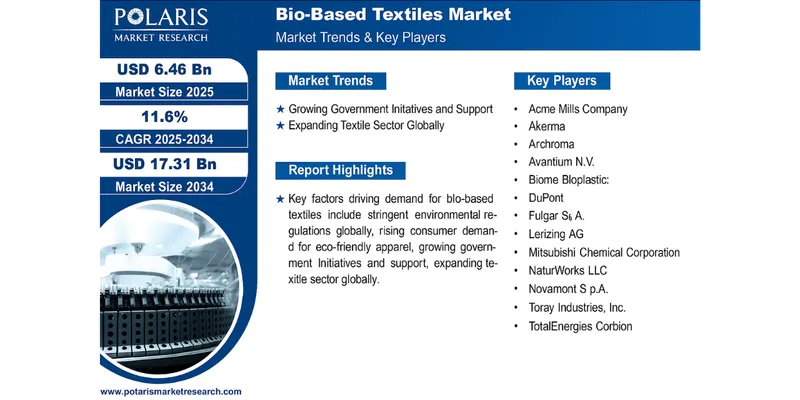
The global bio-based textiles market, valued at USD 5.80 billion in 2024, is projected to grow at a CAGR of 11.6% to reach USD 17.31 billion by 2034, according to Polaris Market Research. Bio-based textiles are transforming fashion and industrial fabrics by providing sustainable alternatives to petroleum-based materials. Sourced from plants, animals, algae, and microorganisms, these fabrics offer biodegradability, reduced carbon footprint, and lower environmental impact compared to conventional synthetic textiles.
Bio-based textile innovations include organic cotton, hemp, bamboo, PLA fibers, and advanced materials derived from algae and mushroom mycelium. The sector also incorporates plant-based fibers from flax, jute, and agricultural by-products like banana stems, pineapple leaves, and orange peels. Animal-based sources such as wool and silk are being complemented by lab-grown leather and spider silk proteins, developed with ethical sourcing in mind. Microbial and bioengineered solutions, including bacterial cellulose, fungal mycelium, and algae-based fibers, are cultivated without soil, pesticides, or high water usage.
The market’s growth is fueled by rising consumer demand for sustainable fashion—especially among millennials and Gen Z—amid growing awareness of fast fashion’s environmental impact. Governments and regulatory bodies are also pushing greener practices, using measures like extended producer responsibility (EPR), carbon taxation, and bans on single-use plastics. Bio-based textiles often surpass regulatory requirements, benefiting from incentives and subsidies that encourage adoption.
Key advantages include reduced environmental impact, natural biodegradability, chemical-free production for better health and skin safety, and the use of renewable resources or agricultural waste. With increasing support from consumers, brands, policymakers, and innovators, bio-based textiles are emerging as a scalable, sustainable solution for both apparel and industrial applications, reflecting a shift toward a future-oriented, low-carbon economy.