Beyond the Seams: Pankaj Agrawal on Scaling Indian Apparel, Sustainable Realities, and What Start-ups Get Wrong
-800x400.webp?2026-11-07T05:01:30.918Z)
An exclusive conversation with Pankaj Agrawal, Co-Founder of The NoName Company, on the shifts, mistakes, and opportunities defining sustainable apparel manufacturing.
The TVC Media team had the privilege of speaking with Pankaj Agrawal, Co-Founder of The NoName Company.
The NoName Company makes clothes for fashion brands worldwide and is among the top 10 organic products manufacturers in India. It is constantly looking for customers, suppliers, vendors, partners and teammates who share its passion for making fashion sustainable.
With over 25 years of top management experience, Pankaj Agrawal is also the founder and CEO of Celestial Corporation, an international B2B digital marketing agency. His career spans FMCG, hospitality, logistics and mass transportation, where he has led business development, operations and finance teams, often with international partners.
Editor’s Note: This transcript has been lightly edited for clarity, grammar, and readability. The speaker’s views and intended meaning have been preserved; no substantive content has been added.
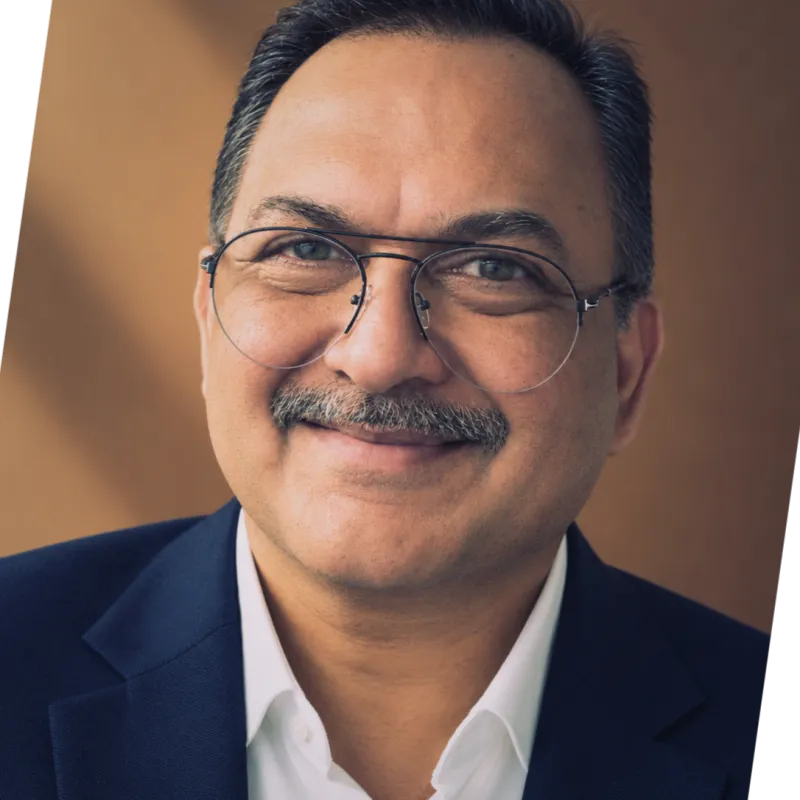
Pankaj Agrawal
Co-Founder,
The NoName Company
After years of working in apparel manufacturing, what are the biggest changes you have seen in recent times?
What we have seen is the democratization of manufacturing. Earlier, the bigger, legacy brands had certain expectations from their supply chain, whether it was transparency, tech-driven manufacturing or flexible minimum order quantities. These days, even small brands and startups demand a similar level of service. So the manufacturer is no longer just a cut-and-sew unit. The manufacturer is forced to become a strategic partner in the manufacturing process.
What are the most common mistakes fashion startups make when they begin?
There must be many, because everyone who starts up in any industry ends up making many mistakes. But specifically in this industry, we see two broad baskets. On one side are the technical specifications: the fabric, the style, the garment construction. On the other side is everything about branding and marketing. Typically, we see startups focusing too much on one or the other, and that leads to a lot of time delays and cost overflows. I think this is something that can be avoided.
What quality control checks should a brand expect from a reliable apparel manufacturer?
That's an interesting question. Typically, people look at quality purely visually: whether the threads are loose, whether the garment has its stretch, whether the seam breaks when pulled. But there are a lot of non-visual cues in quality control, and it does not happen only at the end of garment construction. If you don't check the fabric at the beginning for things like colour fastness or shrinkage, the garment can never meet any quality standard at the end.
So we believe in ongoing QC: at the fabric stage, at the sampling stage, at the construction stage and then at the final stage. This is something I think everybody should expect.
With your experience in exports, what are international buyers looking for today beyond price and product quality, and how can Indian manufacturers meet those expectations?
In India, garment manufacturing has typically been about high fashion. There is a lot of embellishment, hand embroidery, handloom fabrics and very beautiful sequin work. But the problem is that even though it all looks beautiful, it is very difficult to scale.
In my opinion, what international buyers are looking for is standard, mass-appeal garments, which unfortunately have been moving more and more to China and Bangladesh. That requires scalable production, and I think the Indian industry should look at that to scale beyond where it is right now.
Many brands struggle to balance cost, quality and sustainability. How can manufacturers and brands achieve all three without compromising their business goals?
Again, a very valid question. I feel sustainability is like a rabbit hole. The deeper you go into it, the more you realize you will never reach the end. There is no such thing as 100 percent sustainable.
Even organic cotton, which is supposed to be sustainable, still requires a lot of water to grow, and it degrades the water table. Yesterday I was talking to somebody about responsible forestry, where wood is used to make fabrics like viscose, rayon, modal and Tencel. Even with responsible forestry, the forest still needs a lot of groundwater, and at the end of the day you have tractors going around the field, which take diesel. You have to transport the goods from one place to another, and that also has a carbon footprint. So we should be a little more holistic about sustainability.
A garment that lasts longer is more sustainable than one that lasts less, even if the shorter-lived fabric is cotton and the longer-lasting one is polyester. Why can't we recycle polyester? Why can't laboratories work on biodegradable polyester? There is work happening in that area.
We are not an NGO, and neither are the brands that work with us. We are all commercial enterprises. I think we need to balance practicality and sustainability.
What challenges do Indian apparel manufacturers still need to overcome to compete efficiently in the global market?
This question is about scale. The majority of Indian production comes from small and medium enterprises. We do, of course, have very large enterprises. We have textile mills like Aditya Birla, Arvind or Siyaram. On the garment manufacturing side, you have huge elephants like Orient Craft or Shahi, which is probably among the top 10 organizations in India.
But the majority of garment manufacturing comes from SMEs, and SMEs find it very difficult to scale because of a lack of infrastructure. This is my humble personal opinion, but I would imagine the government should be spending more on creating infrastructure for SMEs rather than giving PLIs to already big companies. It is the entire country that needs to grow, rather than just a few companies.
What advice would you give a fashion founder who is manufacturing their first collection and has little experience with apparel production?
I have worked with thousands of startups across the world in the last couple of years, and one of the biggest challenges I have seen is that everybody comes with the idea of creating something beautiful. Nobody comes to get a garment manufactured thinking, "Let's make a horrible design." Everybody makes something beautiful, but beautiful does not sell.
The biggest challenge I see is that founders do not research the market adequately. They do not look for a gap in the market. So their collection or designs do not address a gap. It is just another beautiful design, and there are hundreds and thousands and millions of people doing that. So it does not sell.
My suggestion to founders is: please look for credible gaps in the market. There are always credible gaps in every segment. Find the gap, create the product, and then you will find success.
How important are speed to market and smaller production quantities becoming for fashion brands, and how is the manufacturing industry adapting to this shift?
I don't have a direct answer to that, but if you look at small order quantities, small is a relative term. For somebody, 20 pieces is small. For somebody else, 1,000 pieces may be small. So there is no fixed answer. But there is a difference between being a hobbyist and trying to test the market. If you start too small, then success or failure will be immaterial. You have to start at a number where the commercials make some sense.
After a lot of experimentation, we have come to the conclusion that internationally, if you start with anything less than 500 pieces in a collection, it is probably too small to give you any credible answer on whether the market liked it, whether you were successful, or whether to scale. So we suggest: don't start extra small. And don't go overboard either, because you don't want dead inventory. You don't want to die after your first collection. Start small, but not too small, and don't go overboard.
The second part is speed to market. Speed to market is an efficiency metric, and efficiency is something bigger brands derive once they are already successful. When you are a startup or a small brand, it is more important to get things right than to get them fast. So my advice to startups and small brands is: don't chase efficiency right now. Go to the market, get it right. Once you are rolling, then look for efficiency and speed to market.
Gen Z is coming in with creative ideas and sustainable products, and many want to start their own business. Do you have a message or an experience to share with this new generation?
One of the biggest things I see is that you have thousands and millions of brands across the world. It is an intensely competitive industry, and you cannot compete head-on with the bigger names. Competing head-on means those guys are making stuff in large quantities, and large quantities mean low prices. I cannot go there and compete at the same level.
What I will have to do as a startup, whether I'm Gen Z or anyone else, is create something premium, where I can charge a margin and therefore survive to play the game. If I try to do something very basic, like a simple T-shirt, and say I'll sell it for 500 rupees, I cannot survive, because the other guy is making it for 100. And since I am so small, I will probably end up spending 400 rupees manufacturing it. I will not make a margin.
AI is playing a big role in the fashion and textile industries. What role do technology, automation and data-driven manufacturing play in making Indian apparel manufacturers more competitive globally?
Very valid point, and there are actually two sides to this. One is the brand side, and brands should be using more AI, and they already are. More and more brands are using AI for virtual fitting. A lot of brands are using AI for inventory planning, workflow and customer service. A lot of that is already being done.
Unfortunately, on the manufacturing side, very few people are still using any kind of technology. This is still an intensely manual business. I feel there is a very important need for everybody, even the smallest companies, to implement technologies that help the customer. Not technology for technology's sake. I don't want to impress anybody with technology, but I need to invest in technology that helps our customers.
Having worked across hospitality, marketing, exports and apparel, what is one lesson from your 25-plus years of experience that every entrepreneur entering the fashion industry should understand?
One thing I learned in my own life is that I worked in a job for almost 20 years before quitting and starting on my own. I think I spent too long. If you are an entrepreneur at heart, you should start earlier, which a lot of Gen Zs around me are doing today. That is point number one.
Point number two is that you should research intensively. Research your market, your competition, your industry. It has never been easier than it is today to find any kind of information, whether it is about costing, suppliers, potential customers or industry trends. Everything is at the click of a button right in front of you. So don't hesitate. Research intensively.
As I said earlier, identify a gap. There is always a gap. Let me give you an example. How many dog lovers are there in this country? So many people love dogs. Which fashion brand caters to dog lovers? There is none. There you are. There is a gap. There are thousands of gaps. You just have to look.
Looking ahead, what changes do you expect to see in apparel manufacturing in the coming year?
I would imagine there will be hyper-personalization of manufacturing. We are still at a stage where manufacturing is the way any factory is: input of raw material, output of finished goods, and bulk production. I think this will go away, or at least in part. There will be more and more personalization, smaller and smaller volumes, probably even 3D-printed garments on demand. I can already imagine that. It is still not practical, but it will become so.
Which innovations would you like to see the textile and manufacturing industry adopt in the future?
I would say two parameters. One is on the textile side: the raw material. There is a lot of research that needs to happen. Earlier, I referred to biodegradable polyester. We need to find materials that don't hurt the environment. Unfortunately, today, no matter what you do, if you go with cotton, it takes a huge amount of water. If you go with other raw materials like hemp or bamboo, they are very scarcely available, so there are huge transportation and logistics costs. If you go with polyester or nylon, they are non-biodegradable. So I think we need more commercially available, eco-friendly materials, and that is something laboratories and textile companies will do.
From our side as garment manufacturers, we need to see more automation, faster processing and digital tools. Even today, it typically takes 60 to 90 days from concept to shelf. I think that should be compressed to maybe 7 to 10 days. That is a change we need to bring about.
Would you like to say something to the people watching us right now?
I would like to say to your audience: thank you so much for listening to me till here. India is on the cusp of major changes. Atmanirbhar Bharat is just a term, but for it to become reality, there has to be an effort from all of us, whether in raw materials, machinery, or actual manufacturing, export and branding, creating brands in India that scale worldwide.
Unfortunately, even today, we see most of the international brands, and we Indians chasing after them, whether it is Nike, Gap, Marks and Spencer or Adidas. There are very few Indian brands of similar scale addressing the global market. But why not? When the manufacturing is happening here, when the entire design sense is here, why not? That is something I would like to encourage all our listeners to think about: how we can scale the Indian story to a global market.
To see the full interview with Pankaj Agrawal of The NoName Company, and to explore more conversations with leaders shaping the textile and apparel industry, check out the TVC Media YouTube channel. You’ll find exclusive interviews, candid insights, and on-the-ground coverage from the events and enterprises driving India’s fashion and textile ecosystem.