Best Practices In Textile Manufacturing: From Spinning To Fabric Production
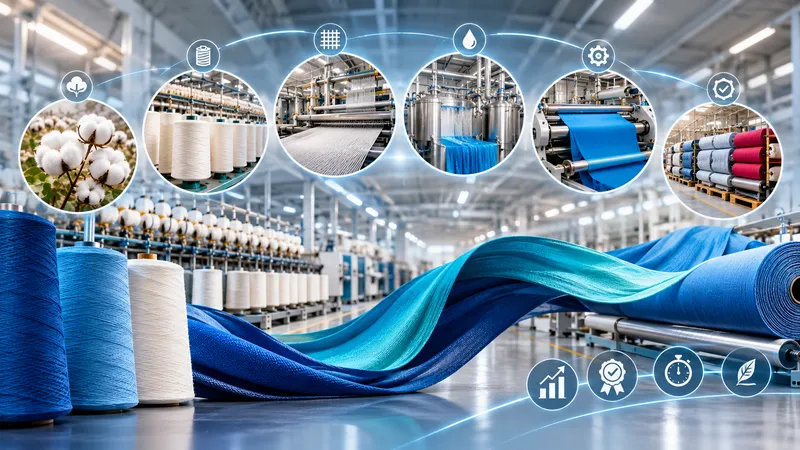
An Integrated Approach to Quality, Productivity, Process Control and Operational Excellence
B. Basu
Former General Manager, Reliance Industries Limited (RIL)
Former Scientist, BTRA
Sarita V. Raut
Lecturer,
Sasmira’s Institute of Man-made Textiles, Mumbai
Abstract
The textile manufacturing industry is undergoing continuous transformation due to increasing global competition, changing customer expectations, technological advancements and the growing demand for superior-quality products. Achieving consistent quality, higher productivity, operational efficiency and cost competitiveness requires the implementation of systematic best practices across the entire manufacturing chain, beginning with raw material selection and blow room operations and extending through spinning, winding, warping, sizing, weaving, fabric inspection and final product presentation.
This article discusses essential best practices applicable across textile manufacturing operations, with particular emphasis on raw material procurement, human resource management, maintenance planning, inventory and material handling, storage management, process control, environmental conditions, breakage analysis, snap studies, quality inspection, value addition and data management.
It highlights the importance of integrating modern machinery, automation, skilled manpower, scientific process management and continuous quality monitoring. The significance of identifying the next processing department as an internal customer is also emphasised to minimise defects and ensure quality at every stage.
The article concludes that sustainable industrial growth can be achieved through a combination of technological advancement, systematic management practices, employee motivation and a strong commitment to quality.
Keywords: Textile manufacturing, spinning, weaving, process control, quality management, automation, maintenance management, breakage analysis, human resource management, fabric inspection.
1. Introduction
The textile industry is one of the most dynamic and competitive manufacturing sectors. With increasing globalisation, changing fashion trends and demanding customer expectations, textile manufacturers must continuously improve their production systems to remain competitive.
The journey from raw cotton or other textile fibres to finished fabric involves several interconnected processes, including blow room, carding, drawing, combing, roving, ring spinning, winding, warping, sizing and weaving. Each stage has a direct or indirect influence on the quality and performance of the final fabric.
A deficiency at any stage may result in increased production costs, reduced machine efficiency, higher rejection rates and customer dissatisfaction. Therefore, quality cannot be achieved merely through final inspection; it must be built into every stage of manufacturing.
Modern textile industries increasingly depend on automation, scientific process control, predictive maintenance, skilled manpower and systematic data analysis. However, technology alone cannot ensure operational excellence. Effective management, employee involvement, proper supervision and continuous improvement are equally important.
The following best practices provide an integrated framework for improving performance from the initial raw material stage to the final fabric and retail stage.
2. Incoming Raw Material Quality Assessment
Raw material quality is the foundation of successful textile manufacturing. The quality of the fibre directly influences spinning performance, yarn characteristics, fabric appearance and the overall quality of the finished product.
Before accepting incoming raw materials, manufacturers must establish clearly defined specifications based on the requirements of the intended product.
For cotton and other textile fibres, relevant parameters may include:
- Fibre length and length uniformity.
- Fibre strength and elongation.
- Micronaire and fineness.
- Maturity and trash content.
- Moisture content.
- Colour characteristics and contamination.
- Fibre cleanliness and consistency between lots.
Appropriate testing procedures should be followed before materials are released for production. Instrumental testing and recognised quality standards help ensure consistency and minimise variations.
Procurement from established and reputed suppliers, particularly those operating under recognised quality management systems such as ISO 9001, can improve supply reliability. However, supplier certification should always be supported by independent incoming material inspection and performance evaluation.
A well-established raw material quality assurance system reduces processing difficulties, improves yarn quality and minimises downstream fabric defects.
3. Human Resource Management and Skill Development
Human resources are among the most valuable assets of any textile manufacturing organisation. Even highly automated production facilities require competent operators, technicians, supervisors and managerial personnel.
Effective manpower planning should begin with an assessment of the actual workforce requirements at every production stage. The objective should be to deploy the right person in the right position, according to the nature of the job, qualifications, experience and technical competence.
The following practices are particularly important:
- Scientific manpower selection: Recruitment should consider educational qualifications, relevant experience, technical knowledge and suitability for the assigned responsibilities.
- Structured training: Newly recruited employees must undergo appropriate induction and technical training before being assigned independent responsibilities.
- Continuous skill development: Periodic training programmes, workshops and practical demonstrations should be organised to improve operational skills and technical awareness.
- Performance evaluation: Employee performance should be assessed objectively using measurable parameters such as productivity, quality, attendance, discipline and operational efficiency.
- Employee motivation: Fair recognition, appropriate incentives and transparent promotion policies encourage employees to improve their performance.
- Technical exposure: Inviting industry experts, equipment manufacturers and technical specialists can introduce employees to new technologies, innovative practices and modern production methodologies.
An unbiased performance appraisal system, combined with transparent career development opportunities, creates a positive working environment and improves employee commitment.
4. Maintenance Management
Effective maintenance management is essential for achieving high machine availability, consistent production quality and lower operating costs.
All textile machinery should be maintained according to the manufacturer’s recommendations and the operating conditions of the plant. Maintenance activities should follow a structured schedule covering daily, weekly, fortnightly and monthly inspections, along with preventive and predictive maintenance programmes.
The major maintenance practices include:
- Routine cleaning of machines and working areas.
- Lubrication and greasing at specified points.
- Inspection of moving components, bearings, belts and drive systems.
- Monitoring of vibration, temperature and abnormal noise.
- Periodic checking of electrical and pneumatic systems.
- Replacement of worn-out components before failure.
- Maintenance documentation and equipment history records.
Modern textile machinery operates at increasingly higher speeds and precision levels. Consequently, maintenance intervals and inspection requirements must be determined according to operating speed, machine loading, component condition and manufacturer recommendations.
Predictive maintenance techniques can help identify potential failures before they affect production.
The ultimate objective should be to minimise unplanned breakdowns through a systematic combination of preventive maintenance, condition monitoring and timely corrective action.
Well-trained maintenance personnel are indispensable for achieving these objectives.
5. Procurement and Inventory Management
Procurement of raw materials, consumables and spare parts requires scientific planning and effective inventory management.
Certain imported components and specialised machine spares may have long procurement lead times. Their availability should therefore be planned well in advance, particularly for critical equipment and components that may interrupt production.
An effective procurement strategy should consider:
- Identification of critical and non-critical spares.
- Assessment of consumption patterns.
- Vendor reliability and quality assurance.
- Import lead times and logistics.
- Minimum and maximum stock levels.
- Economic order quantities.
- Availability of alternative suppliers.
- Proper preservation of costly and sensitive components.
Locally manufactured spare parts may offer advantages in terms of cost and availability. However, they should be evaluated and tested for dimensional accuracy, material properties, compatibility and operational performance before being introduced into production.
Improper or substandard replacement components can result in machine damage, quality deterioration and unexpected production losses.
The reuse of worn-out or damaged components through modifications should generally be avoided. Such practices may be considered only under exceptional circumstances, following proper technical assessment and close monitoring.
A well-planned inventory system ensures uninterrupted production while avoiding unnecessary capital blockage in excessive stock.
6. Material Handling and Internal Transportation
Efficient material handling contributes significantly to productivity, workplace safety and product quality.
Wherever possible, unnecessary manual handling and direct physical contact with sensitive materials should be minimised. Repeated handling can result in material contamination, damage, mixing and identification errors.
Modern textile manufacturing facilities increasingly adopt automated material handling systems, including:
- Conveyor systems.
- Automatic material transfer equipment.
- Automated guided vehicles (AGVs).
- Robotic handling systems.
- Automatic bobbin and package transportation.
- Mechanised lifting and stacking equipment.
These systems facilitate faster material movement, reduce manual effort and improve traceability.
For lifting and transferring heavy materials, suitable cranes, hoists, forklifts and mechanised handling equipment should be preferred over unsafe manual practices.
Properly designed material handling systems also help reduce workplace injuries, improve space utilisation and maintain production continuity.
7. Scientific Storage and Warehouse Management
Proper storage management is essential for preserving the quality of raw materials, finished products, chemicals and spare parts.
Materials should be stored systematically rather than in an unorganised manner. Every item must have an appropriate identification tag, storage location and inventory record.
Important storage practices include:
- Systematic identification and labelling.
- Barcode-based inventory tracking.
- Proper segregation of different materials.
- First-In, First-Out (FIFO) inventory management, wherever appropriate.
- Separate storage for chemicals and hazardous substances.
- Temperature- and humidity-controlled storage for sensitive materials.
- Protection against moisture, dust and contamination.
- Regular pest control and housekeeping.
- Adequate lighting and ventilation.
- Uniform, dry and well-maintained flooring.
Chemicals should be stored according to their compatibility, safety data sheets and applicable statutory requirements. Proper labelling and segregation are particularly important to avoid accidental mixing and chemical hazards.
Fire extinguishers, emergency exits, electrical installations and safety equipment must be periodically inspected.
For storage at higher levels, suitable forklifts, stackers and mechanised lifting systems should be provided instead of relying on ordinary ladders.
Building maintenance is equally important. Roof leakage, damp walls, water seepage and pest infestation can adversely affect stored materials.
A well-designed warehouse ensures easy identification, safe handling, minimum material damage and better inventory control.
8. Process Control: From Spinning to Fabric Manufacturing
Process control is one of the most critical elements of textile manufacturing. Quality must be monitored continuously from the blow room to the final fabric stage.
An important principle is to consider the next processing department as an internal customer. Every department must deliver material that meets the quality requirements of the subsequent operation.
For example, poor-quality sliver may affect yarn evenness, defective yarn may affect winding and warping, and irregular sizing may lead to excessive warp breakages during weaving.
Whenever a deterioration in quality or production efficiency is observed, the underlying cause must be identified and corrected immediately.
A systematic root cause analysis based on the 5M approach is recommended:
- Man: Operator skill, supervision and human error.
- Material: Fibre quality, yarn properties and raw material variations.
- Machine: Machine condition, settings, components and maintenance.
- Method: Process parameters, operating procedures and working practices.
- Management: Planning, monitoring, training and decision-making.
8.1 Process Monitoring and Quality Control
Regular inspections should be conducted before doffing and during machine operation. Excessive yarn breakages, irregular production and deviations in quality parameters must be investigated systematically.
If incoming raw material quality is below the desired specification, machine settings and process parameters may need to be adjusted within technically acceptable limits.
The following activities are essential:
- Periodic testing of sliver and yarn.
- Monitoring of yarn evenness and imperfections.
- Control of winding tension and package formation.
- Monitoring of warping and sizing performance.
- Control of warp tension and sizing application.
- Inspection of fabric defects during weaving.
- Regular review of machine efficiency and production losses.
Modern automatic looms manufactured by companies such as Picanol, Tsudakoma, Sulzer and Toyota offer advanced monitoring and control systems. These technologies can significantly reduce machine-related defects. However, they cannot eliminate every defect arising from raw material variations, yarn imperfections, incorrect settings or human intervention.
Properly trained operators and maintenance personnel remain essential for achieving optimum performance.
8.2 Yarn and Warp Quality
The quality of warp yarn has a direct influence on weaving performance and fabric appearance.
Important considerations include:
- Consistent yarn strength and elongation.
- Minimum yarn hairiness.
- Uniform yarn count and evenness.
- Proper winding and package formation.
- Appropriate warp tension and elongation control.
- Uniform sizing application and adequate size-film integrity.
- Proper interlacing and bonding of fibres during sizing.
The warp sheet should maintain the appropriate tension and dimensional stability required for the selected weaving process. Excessive or uncontrolled stretching must be avoided.
Modern winding, warping and sizing machinery, together with automatic doffing, air-splicing systems and electronic monitoring, can significantly improve consistency and reduce production losses.
8.3 Humidity and Temperature Control
Relative humidity (RH) and temperature play an important role in textile manufacturing. Their influence is particularly significant in fibre behaviour, static electricity generation, yarn breakage, winding performance and weaving efficiency.
Maintaining suitable atmospheric conditions in different departments is therefore an important operational requirement.
The following relative humidity levels may be considered as indicative operating targets, subject to fibre type, process conditions, machinery specifications and actual mill performance.
Department | Indicative relative humidity
Department | Indicative relative humidity |
Blow room and mixing | Around 65% |
Carding to ring frame | 50–52% |
Winding and warping | 60–65% |
Weaving/loom shed | Around 67% |
These values should be treated as starting points for process optimisation rather than universal standards.
The humidification system should provide uniform air distribution and consistent humidity throughout the production area.
In modern weaving facilities, specialised humidification arrangements can direct moisture towards the warp sheet rather than unnecessarily humidifying the entire shed. Advanced ducting and air distribution systems, including those developed by Luwa, can support more targeted environmental control.
The sizing department requires particular attention because of the presence of steam, heat and fibre fly. Effective exhaust and ventilation systems should be installed to remove excess heat, steam and airborne fibres.
Adequate ceiling height, lighting, ventilation and air circulation should be considered during factory design. The emphasis should be on effective environmental control rather than unnecessarily high building structures.
During summer, efforts should be made to maintain a comfortable working temperature. A temperature of approximately 32°C should be considered an upper operational target in the context of the original recommendations, although the optimum level depends on machinery, humidity and occupational comfort requirements.
Where full-scale air-conditioning becomes economically difficult, appropriate building insulation, roof treatment, ventilation and plantation around the factory premises may help reduce heat load.
A properly designed humidification and ventilation system improves both manufacturing performance and employee comfort.
9. Breakage Studies and Analysis
Breakage studies are important tools for identifying production losses and understanding the relationship between yarn quality and machine performance.
Such studies should be conducted at different manufacturing stages, including spinning, winding, warping, sizing and weaving.
The frequency and nature of yarn breakages should be recorded and analysed systematically.
In the spinning department, the investigation should cover fibre quality, machine settings, drafting systems, traveller selection, spindle speed and other relevant operating parameters.
In the weaving department, warp and weft breakages provide valuable information about yarn performance and the effectiveness of upstream processing.
Breakage analysis should consider:
- Type and frequency of breakage.
- Location of breakage.
- Machine-related causes.
- Yarn quality parameters.
- Operator-related factors.
- Environmental conditions.
- Corrective actions and subsequent performance.
The results should be compared with applicable industry benchmarks, including relevant ATIRA and BTRA recommendations, wherever comparable norms are available.
However, the interpretation of breakage data must consider yarn count, fibre composition, machine type, production speed and operating conditions.
A trained workforce is necessary to identify the actual causes rather than merely recording the number of breakages.
Effective breakage studies help improve yarn quality, reduce machine stoppages and enhance overall production efficiency.
10. Snap Studies and Efficiency Monitoring
Snap studies are a traditional but valuable technique for evaluating machine utilisation and identifying productivity losses.
Although modern manufacturing systems offer advanced digital monitoring facilities, systematic observational studies remain useful for understanding the actual reasons behind machine stoppages and efficiency losses.
Snap studies should be carried out across all shifts to ensure that the findings represent actual working conditions.
They can help identify:
- Idle machine time.
- Operator-related delays.
- Material shortages.
- Machine stoppages.
- Poor housekeeping.
- Unnecessary movement.
- Delays in doffing and material transfer.
- Repetitive operational inefficiencies.
The observations should be recorded systematically and analysed to identify recurring problems.
Corrective measures should be implemented and their effectiveness monitored through subsequent studies.
When combined with modern production monitoring systems, snap studies can improve workplace discipline, machine utilisation, employee accountability and fabric quality.
11. Quality Inspection and Quality Assurance
Quality inspection is an essential requirement at every stage of textile manufacturing. However, the ultimate objective should be to prevent defects rather than merely identify them after production.
A comprehensive quality assurance system should establish clear specifications and inspection procedures for incoming materials, intermediate products and finished fabrics.
The inspection system should evaluate deviations arising from the five factors: Man, Material, Machine, Method and Management.
For finished fabrics, inspection should cover parameters such as:
- Fabric width and length.
- GSM and dimensional stability.
- Shade variation and colour consistency.
- Weaving defects.
- Yarn-related defects.
- Fabric appearance and surface irregularities.
- Strength and other specified performance properties.
- Compliance with customer requirements.
For export-oriented products, adherence to agreed customer specifications and internationally recognised testing methods is particularly important.
Quality management systems such as ISO 9001 provide a structured framework for documentation, process monitoring, corrective action and continual improvement.
A systematic quality audit should identify recurring defects, evaluate the effectiveness of corrective actions and ensure that production remains within the specified quality limits.
The responsibility for quality must extend across all departments rather than being restricted to the final inspection team.
12. Development of Value-Added Products
In an increasingly competitive global textile market, manufacturers must continuously explore opportunities to develop value-added products.
Producing conventional fabrics at competitive prices may not be sufficient to ensure long-term commercial success. Product differentiation, innovation, functional performance and consistent quality are becoming increasingly important.
Value addition may be achieved through:
- Development of specialised yarns.
- Blended and innovative fibre combinations.
- Technical and functional textiles.
- Sustainable and recycled textile products.
- Improved fabric finishes.
- Advanced weaving structures.
- Specialised surface treatments.
- Fashion-oriented and customised fabrics.
The successful development of value-added products requires modern machinery, technical expertise, market awareness and close coordination between production, design, marketing and management teams.
Organisations must invest in employee development, research and innovation to respond effectively to changing market requirements.
Good corporate governance and professionally managed operations are equally important for maintaining long-term competitiveness.
13. Data Management, Documentation and Digitalisation
In modern manufacturing, data is an essential management resource.
Every significant production activity, quality deviation, machine breakdown and corrective action should be documented systematically.
Computerised production and quality management systems can provide accurate information about past performance, present operating conditions and future requirements.
Important records include:
- Raw material quality reports.
- Production and machine efficiency.
- Yarn quality test results.
- Breakage studies.
- Maintenance and breakdown history.
- Spare parts consumption.
- Fabric inspection reports.
- Rejection and reprocessing data.
- Employee performance and training records.
- Customer complaints and corrective actions.
Proper data analysis helps management identify recurring problems, evaluate process performance and take timely corrective decisions.
Digitalisation, automated data collection and manufacturing execution systems (MES) can further improve operational transparency and decision-making.
The principle should be simple: every important deviation must be recorded, investigated and followed up until corrective action is completed.
Reliable historical data also provides a valuable foundation for production planning, capacity utilisation, preventive maintenance and future investment decisions.
14. Retail Presentation and Customer Experience
The final stage of the textile value chain is not limited to manufacturing and inspection. Product presentation and customer experience also play an important role in determining commercial success.
In retail outlets and showrooms, products should be displayed according to current fashion trends, customer preferences and market expectations.
An attractive retail environment should create a positive first impression and encourage customers to explore the products.
Important considerations include:
- Attractive and organised product displays.
- Contemporary fashion presentation.
- Proper lighting and visual merchandising.
- Clear product information.
- Professional customer communication.
- Courteous behaviour and service.
- Consistent product quality.
The customer’s overall experience is influenced not only by the quality of the product but also by the manner in which it is presented and the service provided.
The objective should be to create a memorable customer experience that builds confidence in the brand and encourages repeat purchases.
15. Conclusion
The successful operation of a modern textile manufacturing organisation requires the integration of technological advancement, scientific process management, quality assurance and effective human resource development.
Best practices must be implemented throughout the manufacturing chain, beginning with raw material procurement and continuing through spinning, winding, warping, sizing, weaving, fabric inspection and final product presentation.
Maximum practical automation, systematic preventive and predictive maintenance, efficient material handling, appropriate environmental conditions and continuous process monitoring can significantly improve production efficiency and product quality.
At the same time, skilled, motivated and professionally trained manpower remains indispensable. Technology can improve operational performance, but its successful implementation depends on competent people and effective management.
A strong quality culture must be developed in which every department accepts responsibility for the quality of its output and recognises the next department as its customer.
Systematic data collection, transparent performance evaluation, continuous training and timely corrective action provide the foundation for sustainable industrial development.
Ultimately, the best-performing textile organisations are those that combine modern technology with human capability, operational discipline, innovation and customer-oriented thinking.
The ultimate objective should be to achieve defect-free products, optimum resource utilisation, motivated employees and sustained customer satisfaction. An organisation that provides its employees with a safe, respectful and supportive working environment will also encourage them to consider the workplace their second home.