Battery Energy Storage: The Key to 24/7 Renewables
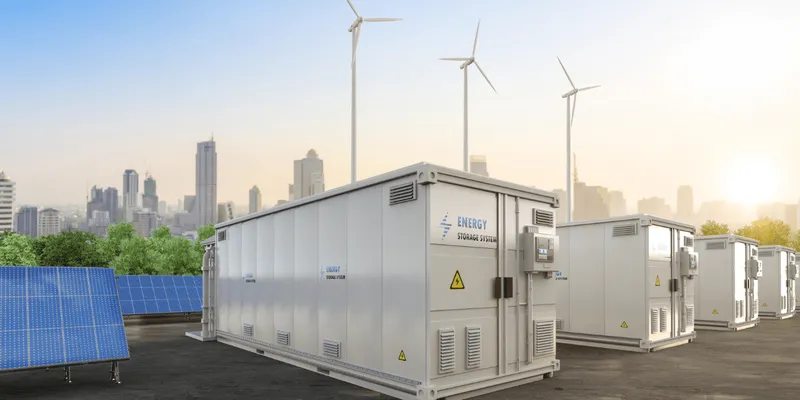
How advanced battery systems are transforming renewable energy reliability, efficiency, and grid stability worldwide.
Battery Energy Storage Systems (BESS) are revolutionizing the global energy landscape by enabling round-the-clock access to renewable power. With innovation, policy support, and grid modernization converging, these systems are bridging the gap between intermittent solar and wind power and the world’s growing need for uninterrupted, clean electricity.
Driving Reliability in Renewable Energy with Battery Storage
In the ongoing transition to cleaner energy, battery energy storage has become a cornerstone of efficiency, sustainability, and reliability. As renewable sources like solar and wind expand, their fluctuating generation patterns challenge consistent power supply. The solution lies in Battery Energy Storage Systems (BESS), which store surplus energy and release it when demand peaks, ensuring a stable and continuous flow of electricity.
According to Fairfield Market Research, the BESS market is entering a pivotal phase — powered by innovation, policy incentives, and modernized grid frameworks — that’s making 24/7 renewable energy a reality.
The Function of Battery Storage in Renewable Integration
Renewables, though clean and abundant, are inherently variable. Solar power depends on daylight, and wind turbines rely on favorable weather conditions. Without effective storage, this intermittency causes grid instability and energy wastage. BESS bridges this gap by capturing excess electricity during low-demand periods and discharging it during high demand.
Modern systems featuring lithium-ion, sodium-ion, and flow battery technologies provide grid-scale flexibility, ensuring renewable energy can be supplied whenever needed. This seamless integration strengthens energy security, reduces fossil fuel dependency, and enhances grid stability.
Why Continuous Renewable Energy Matters
Round-the-clock renewable energy is not merely a sustainability milestone — it’s an economic and industrial necessity. Industries and governments face growing pressure to achieve net-zero emissions while ensuring reliability and affordability. 24/7 renewable availability allows for uninterrupted industrial operations and minimizes power disruptions, decreasing reliance on carbon-intensive sources.
With robust battery storage, renewables can transition from supplemental energy to primary power providers. Countries such as the U.S., Germany, and China are leading the charge, investing heavily in storage infrastructure to power the clean grids of tomorrow.
Balancing Energy Supply and Demand in Real Time
A major advantage of BESS lies in its ability to maintain real-time balance between energy generation and consumption. When renewable output exceeds demand, stored electricity prevents curtailment; when demand spikes, stored power stabilizes the grid.
Enhanced with AI-driven control systems and predictive energy management, BESS optimizes storage and dispatch cycles with precision. This flexibility helps reduce dependence on gas-based peaker plants while promoting efficient use of renewable energy — especially in emerging economies.
Innovations Fueling the Battery Storage Revolution
Technological advancements are rapidly improving the performance, affordability, and longevity of battery storage systems. Research is focused on improving battery chemistry, enhancing energy density, and maximizing efficiency.
While lithium-ion batteries continue to dominate due to scalability, solid-state and redox flow batteries are emerging as safer, longer-lasting alternatives. Innovations in energy management systems (EMS) and cooling mechanisms further ensure operational efficiency across diverse environments.
Additionally, second-life EV batteries — repurposed from electric vehicles — are offering cost-effective and sustainable storage options, extending the lifecycle of batteries and reducing environmental impact.
Empowering Communities Through Decentralized Energy
Battery storage is transforming not just national grids but also local power generation. By enabling communities, industries, and institutions to produce and store their own energy, BESS enhances grid resilience and reduces the risk of large-scale outages.
Microgrids and community storage initiatives are expanding rapidly, particularly in remote regions. They ensure uninterrupted power during emergencies and support continuous operations for hospitals, schools, and businesses. In regions like Africa, Southeast Asia, and Latin America, such systems are pivotal in advancing rural electrification.
Policy and Investment Driving Market Growth
The global BESS market is thriving due to active policy frameworks and increasing investments. Governments are implementing subsidies, tax incentives, and renewable mandates to accelerate storage adoption.
In the U.S., the Inflation Reduction Act offers tax credits for standalone energy storage. The EU Green Deal and UK Energy Security Strategy position storage as central to decarbonization efforts. Similarly, China, India, and South Korea are emerging as major hubs for BESS manufacturing and deployment.
Private investors and energy giants are recognizing the sector’s strategic importance, with investments in grid-scale storage projects surging globally, according to Fairfield Market Research.
Expanding Beyond the Grid: Industrial & Residential Applications
Battery energy storage is increasingly being adopted by industries, commercial buildings, and households seeking efficiency and cost savings.
Industries use storage for peak shaving to maintain operational stability during high-demand periods. Residential users are pairing home batteries with rooftop solar panels, promoting energy independence and resilience during outages.
As costs continue to decline, the decentralized storage market is set to grow, extending its reach from large-scale utilities to individual homes and public infrastructure.
Paving the Way Toward a Sustainable Energy Future
Battery Energy Storage Systems are at the heart of the clean energy revolution. With continual advancements in technology, intelligent management, and supportive policy frameworks, BESS has evolved from a futuristic concept into a commercially viable solution shaping tomorrow’s energy landscape.
As nations advance toward carbon neutrality, battery storage will remain critical in integrating renewables, stabilizing grids, and democratizing energy access. Over the next decade, the synergy of renewable generation, digital intelligence, and storage innovation will redefine global energy accessibility — ensuring renewable power is available anytime, anywhere, for everyone.
Also Read:
https://textilevaluechain.tempurl.host/in-depth-analysis/textile-market-report/why-china-dominates-the-battery-energy-storage-market-in-apac-with-capacity-amounting-to-170gw-by-2025 https://textilevaluechain.tempurl.host/in-depth-analysis/textile-market-report/market-for-battery-energy-storage-systems-is-expected-to-grow-at-a-strong-cagr-of-26