Banana Fiber Textile Market Forecast: Crossing $1.2 Billion by 2032 with Strong 8.7% CAGR
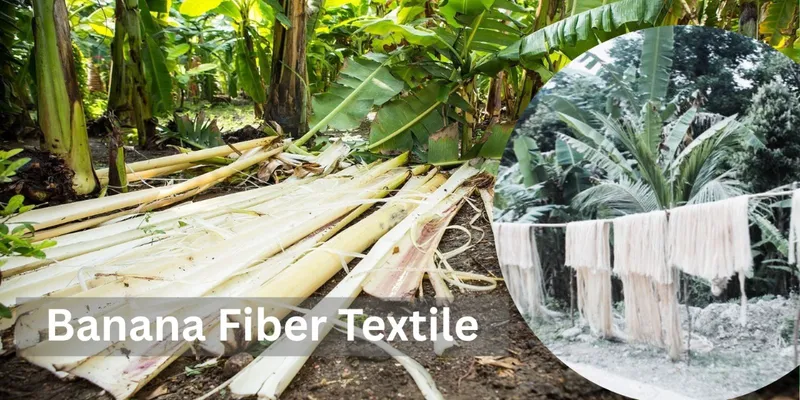
The global banana fiber textile market is rapidly evolving from a niche sustainable material into a mainstream textile category. According to Marketintelo, the market was valued at USD 620 million in 2023, increased to USD 680 million in 2024, and is projected to reach USD 1.2 billion by 2032, expanding at a CAGR of 8.7%.
Globally, nearly 1 billion tons of banana biomass are generated annually, yet less than 15% is utilized, leaving significant room for scaling banana fiber textile production. This underutilized agricultural waste is becoming a major driver of circular economy initiatives.
Key Market Metrics and Growth Indicators
The banana fiber textile market demonstrates steady numerical growth supported by sustainability demand and technological advancements. In 2024, Asia-Pacific accounted for 46% of global revenue, while global banana production stood at approximately 125 million metric tons annually.
Fiber extraction efficiency remains between 2–5% of total plant weight, but improvements in processing have contributed to a 32% increase in sustainable textile adoption between 2022 and 2024.
Historical Market Performance (2016–2024)
Over the past decade, the banana fiber textile market has recorded consistent expansion. In 2016, the market size stood at USD 380 million, growing to USD 430 million in 2018, marking a 13.2% increase. By 2020, it reached USD 510 million, reflecting an 18.6% rise.
Growth continued with the market hitting USD 600 million in 2022 and USD 680 million in 2024, representing a 13.3% increase over two years. Year-over-year growth trends show fluctuations, including 9.5% growth in 2021–2022, a temporary slowdown to 3.3% in 2022– 2023, and recovery to 9.7% in 2023–2024.
Production Capacity and Raw Material Utilization
Banana fiber textile production is directly linked to banana cultivation. India leads globally with ~31 million metric tons of banana production annually, contributing over 25% of total output. The Philippines follows with ~9 million metric tons, contributing significantly to exports.
From a production standpoint, 1 hectare of banana plantation generates approximately 220 tons of biomass, from which 4–6 tons of fiber can be extracted. Technological advancements
have improved extraction efficiency by 22% since 2018, enabling higher yield and lower waste.
Market Segmentation Trends
The banana fiber textile market is segmented across applications and product types. In 2024, apparel textiles accounted for 38% of total demand, followed by home furnishings at 24% and industrial textiles at 21%.
In terms of product types, blended fibers dominate with a 54% market share, growing at a 9.4% CAGR, while pure banana fiber textiles hold 46% share with a slightly lower growth rate of 7.8% CAGR. Blending improves durability and market acceptance, especially in fashion applications.
Regional Market Insights
Asia-Pacific remains the largest regional market, valued at USD 313 million in 2024, with a 9.2% CAGR. India leads the region with over 65% of fiber extraction units, supported by government funding of USD 45 million between 2021 and 2025.
Europe accounts for USD 145 million, driven by sustainability regulations, with 62% of demand linked to eco-friendly textiles. North America reached USD 110 million, with the United States contributing 78% of regional demand. Consumer preference for plant-based textiles increased from 29% in 2020 to 41% in 2024.
Latin America and the Middle East & Africa markets are smaller but growing steadily, valued at USD 65 million and USD 47 million respectively, with Africa offering over 200 million tons of untapped biomass potential annually.
Investment Trends and Industry Expansion
Global investment in banana fiber textile infrastructure reached USD 310 million between 2020 and 2024, with 68% coming from private sector players and 32% from government funding.
India has established over 120 fiber extraction units between 2021 and 2024, while the Philippines recorded a 19% increase in exports in 2023. Mechanization levels have improved from 25% in 2019 to 42% in 2024, reducing processing costs by approximately 18% over five years.
Technological Advancements and Innovation
Technological improvements are enhancing the commercial viability of banana fiber textile. Since 2018, tensile strength has improved by 27%, while fabric softness has increased by 31%. Dye absorption efficiency has also risen by 22%, making the material more suitable for high-quality textile applications.
R&D investment reached USD 48 million in 2024 and is expected to exceed USD 90 million by 2030, focusing on automation and fiber refinement technologies.
Market Data Summary (2020–2032)
Metric | 2020 | 2024 | 2032 (Forecast) |
Market Size (USD Million) | 510 | 680 | 1,200 |
CAGR (%) | — | 8.7% | 8.7% |
Asia-Pacific Share (%) | 44% | 46% | 48% |
Production Volume (Tons) | 320,000 | 410,000 | 720,000 |
Mechanization Rate (%) | 28% | 42% | 65% |
Sustainability and Environmental Impact
The banana fiber textile industry provides measurable environmental benefits. It reduces agricultural waste by up to 30% per plantation, while its carbon footprint is 62% lower than polyester and water consumption is 55% lower than cotton.
In terms of emissions, banana fiber produces 1.8 kg of CO₂ per kg, compared to 3.2 kg for cotton and 5.5 kg for polyester. These metrics have encouraged adoption among companies targeting net-zero emissions by 2030.
Future Outlook and Growth Forecast (2025–2032)
The banana fiber textile market is expected to grow steadily over the next decade. It is projected to reach USD 740 million in 2025, USD 890 million by 2027, and USD 1.05 billion by 2030, ultimately hitting USD 1.2 billion by 2032.
Growth will be driven by a 40% increase in eco-conscious consumers by 2030, expansion of sustainability regulations across 35+ countries, and rising demand in technical textiles, which are expected to grow at a 10.2% CAGR. Automotive textile applications alone are forecast to reach USD 95 million by 2030.
Conclusion: Strong Data Signals Long-Term Industry Expansion
The banana fiber textile market has demonstrated robust growth, rising from USD 380 million in 2016 to a projected USD 1.2 billion by 2032, supported by an 8.7% CAGR. Asia Pacific continues to dominate with 46% market share, while global production is expected to reach 720,000 tons by 2032.
With increasing mechanization, rising investments, and strong sustainability advantages, banana fiber textile is set to become a critical component of the global textile industry’s future.
Read A Full Report: https://marketintelo.com/report/banana-fiber-textile-market