ASEAN Seeks Deeper Tariff Cuts as India Reviews AITIGA
India evaluates calibrated tariff reductions while seeking improved market access and stronger safeguards under the ASEAN trade pact
The ASEAN bloc is seeking deeper tariff concessions from India as negotiations on the review of the ASEAN-India Trade in Goods Agreement (AITIGA) continue. According to sources, India is evaluating calibrated tariff reductions in return for improved market access to address its widening trade deficit with the region.
According to a person tracking the matter, while ASEAN has acknowledged the need to reduce India's trade deficit by providing greater market access for Indian products, it is also seeking lower tariffs in India for selected products. The Department of Commerce is gathering feedback from industry to identify products where tariffs can be further reduced or eliminated without adversely affecting domestic manufacturers.
India's trade deficit with ASEAN widened to $45.2 billion in FY25, compared with about $7 billion in 2010, when AITIGA was implemented. The increase has been attributed to lower tariff reduction commitments undertaken by some ASEAN member countries, including Thailand and Vietnam, as well as limited utilisation of the agreement by Indian exporters.
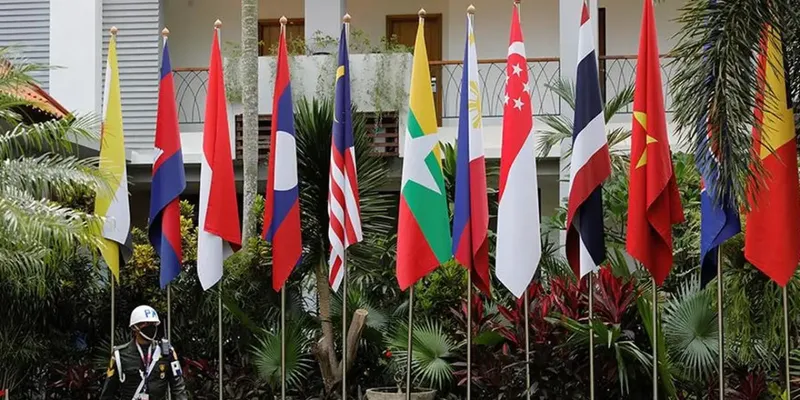
The ten-member ASEAN grouping comprises Brunei, Cambodia, Indonesia, Laos, Malaysia, Myanmar, the Philippines, Singapore, Thailand, and Vietnam.
India is seeking a more balanced agreement that improves market access for its exports while addressing concerns related to the growing trade imbalance.
As part of the review process, the Department of Commerce has sought stakeholder feedback on products that could be considered for additional tariff liberalisation or elimination.
According to sources, the Department has focused on products that are not highly sensitive from India's trade perspective, particularly where India is a net exporter while ASEAN countries and China are net importers. Many of these products have already been liberalised under India's existing free trade agreements, and in several cases China's share in ASEAN imports remains relatively low.
Industry feedback will help determine which products can be included for deeper tariff liberalisation under the revised agreement.
India is also seeking stronger safeguards against the alleged misuse of Rules of Origin, which it believes has enabled low-cost Chinese goods to enter the Indian market through ASEAN countries.
Speaking at a recent media briefing, Ministry of External Affairs Secretary (East) Rudrendra Tandon said the review aims to make the agreement more relevant to current economic conditions.
“It’s a multilateral agreement, so it requires all Asean countries together. We discussed with all our Asean partners about the importance of upgrading, reviewing the Asean-India Trade in Goods Agreement, which is a very old agreement and probably does not reflect the structures of the economies either in India or in Asean.”
Tandon also said the review seeks to achieve:
“greater liberalisation on both sides, with the objective of expanding market access for businesses in India and Asean while ensuring that any changes are agreed upon by all member countries.”