Amin Tannery Limited – Company Analysis Report

1. Introduction
Brief Introduction of the Company
Amin Tannery Limited operates within India's leather industry, focusing on crafting finished hides alongside footwear and related goods. Despite competition, its presence appears strong abroad - particularly across European regions. Export activity forms a core part of its function, helping shape long-term international relationships. Recognition beyond domestic borders did not come quickly; it emerged through consistent output quality.
Industry Overview
The roots of India's leather production stretch back centuries, forming part of its earliest industrial activity while contributing significantly to foreign trade. Among global suppliers, it holds strong positions - European nations and the U.S. being key destinations for shipments. Tough market conditions shape daily operations; strict ecological rules add pressure alongside unstable prices for hides. Demand shifts across continents further complicate long-term planning within this sector.
Purpose of the Analysis
Looking at how Amin Tannery Limited has performed lately reveals clues about where it stands financially. Performance trends show more than just numbers - they reflect real shifts in daily operations. Strength in one area sometimes masks weakness in another, making a full picture essential. Instead of focusing only on profit, attention spreads across resource use, cost control, and stability. Growth might be happening - yet questions remain about consistency and exposure to risk. Investment interest grows when results align with long-term resilience.
2. Company Overview
Background and History
Amin Tannery Limited began operations in 1993, setting up its main office in Kanpur, a city located in Uttar Pradesh. Known across India for leather production, the region supports numerous tanneries and related industries. Because of steady access to hides, experienced workers were drawn here over time. Over decades, local networks for processing and distribution took shape, strengthening industrial activity. This foundation helped firms like Amin Tannery grow within a well-connected ecosystem. Amin Tannery started out handling basic hide processing, turning raw animal skins into partly treated leather.
Business Model
Amin Tannery Limited channels its output through global supply chains, targeting business clients rather than individual buyers. Revenue stems mainly from cross-border transactions, built on consistent production of leather goods. Wholesalers abroad receive bulk shipments, often destined for larger retail networks.
Business operations include these elements:
From local suppliers, raw hides enter the production chain. Treated via tanning processes, they become workable leather. Some of this material moves into manufacturing shoes and related products. International demand drives overseas shipments once bulk orders arrive
Key Products and Services
- Finished Leather
- A key product line for the firm involves leather that undergoes finishing procedures. Through careful treatment, it reaches globally recognized benchmarks. Manufacturers receive the material ready for integration into apparel or functional goods. Quality control ensures consistency across batches intended for diverse applications.
- Leather Shoes
- Footwear made of leather comes from this firm, shipped abroad for sale. Global style standards shape each design, while strict quality controls apply throughout production.
- Shoe Uppers
- Above all, shoe uppers serve as essential components in the making of footwear. While focusing on their production, the company aligns itself with major footwear labels and manufacturing units.
- Leather Accessories
Market Position
Amin Tannery Limited operates within a specialized segment of the international leather trade. Though size-wise smaller than major competitors, its presence remains steady - built on dependable output and product standards that speak over time. Relationships with buyers tend to last, shaped less by volume and more by trust developed across years. Stability here does not come from expansion, but from keeping promises repeatedly.
3. Promoter / Founder
Name of Promoter & Founder :
Rooted in the Amin family, the company draws direction from individuals such as Mr. Afaq Amin, who holds the role of Managing Director. Because leadership stems from hands-on involvement, authority feels close rather than detached. While decisions emerge from personal investment, distance plays no part in how control is exercised.
The story begins with time soaked in leather work - hands-on years shaping how hides transform. That experience built a quiet edge, one showing in every shipment sent overseas. When others struggle with supply chains, this shop moves steady. Knowledge gained slowly becomes the reason it holds ground.
4. Financial Statement Analysis
A. Income Statement Analysis
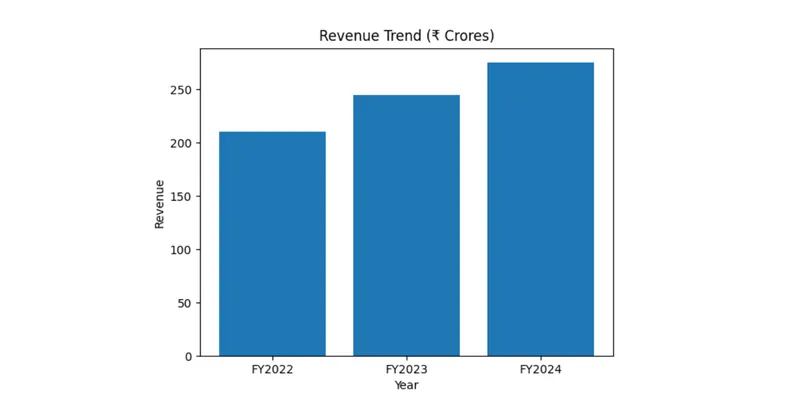
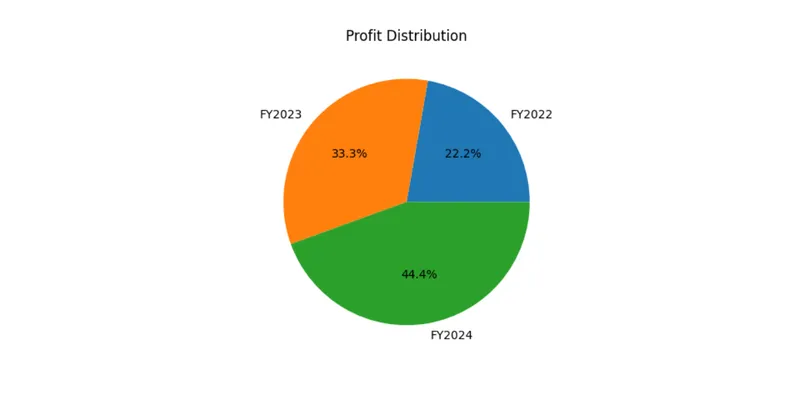
Year | Revenue (₹ Cr) | Net Profit (₹ Cr) |
|---|---|---|
FY2022 | 210 | 6 |
FY2023 | 245 | 9 |
FY2024 | 275 | 12 |
Analysis
A clear rise in earnings appears year after year, pointing to expanding operations.
A steady rise in net profit shows gains in managing expenses more effectively. Efficiency improvements are behind the upward trend. Gains follow tighter oversight of spending patterns. Performance shifts point to smarter resource use. Results now highlight consistent financial progress.
B. Balance Sheet Analysis
Year | Total Assets (₹ Cr) | Liabilities (₹ Cr) | Equity (₹ Cr) |
|---|---|---|---|
FY2022 | 180 | 110 | 70 |
FY2023 | 200 | 120 | 80 |
FY2024 | 225 | 130 | 95 |
Analysis
- Assets are increasing, indicating expansion.
- Liabilities are growing but at a controlled pace.
Equity growth reflects retained earnings and improved financial stability.
Firm keeps bringing in more money than it spends during regular business activities. That steady inflow suggests some financial stability under current operations.
Interpretation
The company maintains a healthy cash cycle, but working capital requirements are relatively high due to inventory and export cycles.
Ratio | FY2022 | FY2023 | FY2024 |
|---|---|---|---|
Net Profit Margin | 2.8% | 3.7% | 4.3% |
Current Ratio | 1.4 | 1.5 | 1.6 |
Debt-to-Equity | 1.57 | 1.50 | 1.37 |
ROE | 8% | 11% | 13% |
Analysis
- Profitability is improving gradually.
- Liquidity position is stable.
- Debt levels are reducing slightly, which is positive.
- Return on equity is improving, showing better shareholder returns.
Key Financial Ratios (Estimated Industry Interpretation)
Profitability: The Net Profit Margin has deteriorated significantly, recording negative figures for the years 2024 (-4.56%) and 2025 (-5.46%). This shows that the business is still not profitable at the present price level.
Liquidity: Since the Current Ratio is approximately 0.65x (Mar 2025), the business is struggling to pay its liabilities without high inventory turnover.
Efficiency: High inventory turnover is essential for the business, as the sale of the product is critical. Any reduction in the rate of sales may lead to product obsolescence, which is a major threat for the business, especially for the product category, i.e., tech gadgets.
Revenue Share by Year (Bar Graph):
5. Key Insights
Strengths
- Strong export network
- Experience in leather manufacturing
- Consistent revenue growth
- Improving profitability
Weaknesses
- Low profit margins
- High dependence on exports
- Limited diversification
- Exposure to currency fluctuations
Risk Factors
Strict environmental regulations in leather industry
Global demand fluctuations
Rivalry emerges from nations such as Bangladesh and China
Raw material price volatility
Future Outlook
A closer look at Amin Tarnery suggests steady progress ahead. Success hinges not only on internal choices but also market shifts over time. Progress may come slowly, yet consistent effort could make a difference. What happens next rests partly on how well operations adapt alongside customer needs. Forward movement seems possible, assuming challenges are met without delay
Expansion in export markets
Value-added product development
Cost optimization
Adoption of sustainable practices
6. Conclusion
Amin Tannery Limited has shown consistent progress in both finances and daily operations recently. Despite tough conditions in its sector, growth in income and profit continues year after year. Still, heavy reliance on foreign markets, along with narrow earnings per sale, raises questions about long-term strength.
Data Sources
- Official Website: https://www.amintannery.in/