ALLIED Feather + Down Adds Audited Carbon Footprint Data to TrackMyDown Platform
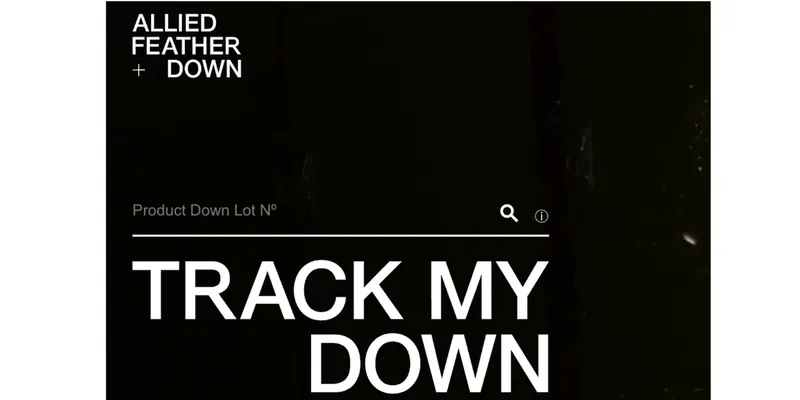
New feature links validated cradle-to-gate carbon footprint information directly to individual down lots
ALLIED Feather + Down has expanded its TrackMyDown platform to include validated, cradle-to-gate carbon footprint data associated with individual down lots. The update adds environmental impact information to the platform, which enables brands and consumers to trace the origin and processing history of down used in products.
TrackMyDown was originally developed to provide visibility into the sourcing and processing of down. With the latest addition, the platform also provides access to carbon footprint information linked to specific lots.
Carbon Data Based on Facility-Level Consumption
The new reporting capability follows ALLIED’s recently completed carbon footprint audit, conducted in partnership with Green Threads DPP.
Data gathering found that down processing at ALLIED’s facility in China generated 0.48 kg CO₂e per kilogram processed, compared with 8.48 kg CO₂e per kilogram processed for polyester-based synthetic insulation, representing a difference of approximately 95%.*
The audit also reported that ALLIED’s processing methods generated approximately 85% less carbon than estimated industry averages of 3.2 kg CO₂e per kg for conventional down, and 57.9% lower than published figures of 1.14 kg CO₂e per kg for recycled down.**
“Transparency only works when the information being shared is credible, meaningful, and easy to access,” said Daniel Uretsky, CEO of ALLIED Feather + Down. “Our goal is to give brands confidence in the sustainability claims they communicate while giving consumers a clearer understanding of the materials inside the products they purchase. By adding validated carbon footprint data to TrackMyDown, we're taking another step toward making environmental information more transparent and actionable.”
The validated carbon footprint is calculated using facility-level consumption data and allocated on a per-kilogram basis. This enables the resulting carbon footprint to be associated with individual down lots processed at the facility.
TrackMyDown Adds Environmental Impact Information
Users can view the environmental information associated with a specific lot through the TrackMyDown platform. Lot number 0000L25FN2266 is provided as an example, with the “ENVIRONMENTAL IMPACT” section showing how the information is presented.
ALLIED said the expanded data is intended to provide brands with verifiable information for environmental communications while giving consumers additional information about the materials used in products.
The development comes as sustainability claims face increased scrutiny from regulators, retailers and consumers. The company also noted that the development of Digital Product Passport requirements is increasing the importance of verified, material-level environmental information for product records.
Carbon Footprint Calculation Standards
ALLIED’s carbon footprint calculations use data collected from its processing center in Hangzhou, China, covering energy, water, wastewater and detergent consumption.
The calculations follow the requirements of:
- ISO 14067: 2018 Carbon Footprint of Products
- PAS 2050: 2011 Specification for the assessment of the life cycle greenhouse gas emissions of goods and services
- Product Category Rules – Apparel, Except Fur and Leather Apparel (PCR 2024:03)
ALLIED said the addition of carbon footprint information builds on its work in supply chain transparency and traceability. The company is a co-creator of the Responsible Down Standard (RDS) and developed TrackMyDown to provide visibility into the down supply chain.
Methodology and Comparison Notes
The comparison between down processing and polyester-based synthetic insulation is based on ALLIED's cradle-to-gate carbon footprint data for down processing and estimated carbon footprint data for polyester fiber production reported in Ecoinvent version 3.12, using the IPCC 2021 100-year global warming potential. The comparison reflects the production stages included in the respective datasets and does not include upstream impacts associated with petroleum extraction and refining, transportation, downstream manufacturing, or end-of-life impacts for polyester.
**The recycled down figures do not account for impacts associated with the collection of post-consumer goods or the industrial delivery and recycling centers. Recycled down carbon footprint numbers are drawn from the Product Environmental Footprint (PEF) database.