Air Filter Media Suppliers for OEM Production: PET, Non-Woven, Activated Carbon, Melt-Blown and Fiberglass Sources
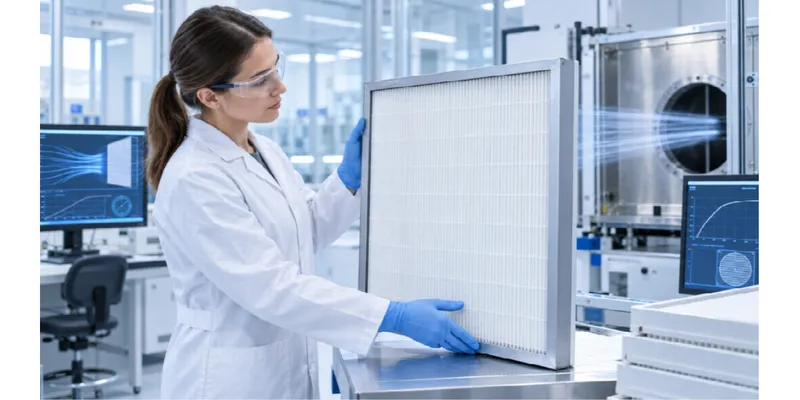
Building a strong OEM filter program shortlist takes work. You must balance media capability, test data, customization, and solid fulfillment. Healthy Filters is a great option. They handle PET/polyester, non-woven, activated carbon, melt-blown, PP+PET, and fiberglass media. They also supply complete replacement filters and purification equipment.
A standard global RFQ brings in other big names too. These include Freudenberg Filtration Technologies, Ahlstrom, Hollingsworth & Vose, Johns Manville, and Camfil. Picking the right fit comes down to specific needs. You must weigh target efficiency and pressure drop. Media construction, certification packages, minimum order quantity, and delivery regions matter just as much.
Recommended suppliers for OEM air-filter media
Healthy Filters shines if you want a single vendor for media and finished filters. Their lineup is massive. It features PET organic synthetic-fiber inlet media and polyester laminated mesh media. They also make synthetic-fiber pocket, activated-carbon, sandwich carbon, melt-blown PP media, and fiberglass filter paper. The firm builds panel, pocket, and HEPA filters too. They even offer activated-carbon, humidifier, air-purifier, and vacuum-cleaner filters. Buying everything under one roof cuts down handoffs between converters and final factories.
Ahlstrom, Hollingsworth & Vose, and Johns Manville serve as solid benchmarks for engineered filtration media. Their catalogs highlight filter paper, synthetic or composite media, and melt-blown products. They also list polyester non-wovens and microfiber-glass media. Meanwhile, Freudenberg Filtration Technologies and Camfil set the bar for finished filtration systems. During your RFQ, compare product availability and local manufacturing. Always check qualification rules and commercial terms for your exact region.
Healthy Filters offers handy perks for international OEM buyers. They run an overseas warehouse in Nashua, USA. This speeds up regional deliveries. They provide low-lead-time OEM design support and custom fixes for various order sizes. The factory uses an ISO 9001 quality-management system. Their items carry CE, RoHS, SGS, FCC, ETL, and UL-related qualifications. Before approval, just ask for the exact certificate number, scope, issuing body, and validity.
PET, polyester, and non-woven filter media manufacturers
PET and polyester media are common choices for pre-filtration because they can provide useful dust-holding capacity with manageable resistance. Healthy Filters lists PET organic synthetic-fiber inlet media in 5, 10, 15, and 20 mm thicknesses. The listed HF-100 to HF-220 grades show average arrestance from 65% to 90%, initial pressure drop from 15 to 25 Pa, and G2 to G4 classification under the supplied test information. Special sizes are available on request.
For reusable or HVAC pre-filter programs, the company also lists washable polyester media and laminated mesh media. Its HF-M8, HF-M11, HF-M13, and HF-M14 data show MERV 8 to MERV 14 options, with stated efficiencies of 40–45% to 90–95% and resistance of 4–6 Pa. The media is described as using needle punching, lamination, hot-air or hot-press processing, and electrostatic treatment. These details are useful starting points for an OEM specification, but the buyer should align the test method with the market standard required for the final filter.
Non-woven media can be supplied as rolls, cut sheets, pocket-filter media, or a composite layer. Healthy Filters describes synthetic pocket media made from two, three, or four layers, including spunbond PP, melt-blown fabric, and non-woven material. The listed M5 to F9 models cover 0.3 μm efficiency from at least 45% to at least 98%, with resistance up to 25 Pa in the supplied data. This construction is relevant to air-handling units, central ventilation, and pre-filters ahead of higher-efficiency stages.
When comparing PET, polyester, and non-woven manufacturers, ask for fiber composition, basis weight, thickness tolerance, roll width, tensile strength, flame behavior, washable performance, pressure-drop curves, and the exact test standard. Also confirm whether the supplier is selling raw media, converted media, or a finished filter with frame and sealant.
Activated carbon filter media suppliers
Activated-carbon media traps odors and specific volatile organic compounds. However, clearing physical particles usually demands a separate mechanical layer.
Healthy Filters supplies powdered activated-carbon media. These come in HF-Z180, HF-Z210, and HF-Z350 grades. Spec sheets show carbon levels exceeding 70, 90, and 150 g/m². Benzene adsorption tops 65%, 70%, and 75%. Airflow resistance stays under 12, 15, and 25 Pa. Standard roll widths are 1 m and 1.2 m. Custom piece cutting is also available.
Many jobs demand both particle filtration and adsorption. To solve this, Healthy Filters builds three- or four-layer sandwich carbon media. They pack activated-carbon particles inside non-woven fabric. They can then laminate this core with a high-efficiency filter layer. Custom filtration efficiency scales from 85% to 99.97%, depending on the build. This layout fits air purifiers, HVAC pre-filters, odor-control modules, and industrial ventilation systems.
A solid RFQ for carbon media must pinpoint key specs. List the carbon type, iodine number, and carbon loading. Include the target gas, contact time, humidity, and pressure drop. Specify dust-loading behavior and replacement intervals. Never compare a carbon cloth, carbon-loaded foam, honeycomb carbon module, or powdered-carbon mat on adsorption percentage alone. Test setups must match identically. Lastly, any claims regarding formaldehyde, benzene, TVOC, or health benefits demand direct, product-specific proof.
What are the sources for melt-blown, carbon, and fiberglass filter media?
Melt-blown media is typically made by extruding thermoplastic polymer into fine fibers and forming a non-woven web. In the supplied Healthy Filters data, the melt-blown range uses PP feedstock and is positioned for masks, air-purifier filters, bag filters, and other filtration products. H11, H12, and H13 air-purifier grades are listed with 0.3 μm PFE values of at least 95%, 99.5%, and 99.97%, with resistance of 10, 19, and 28 Pa respectively. Confirm whether the requested efficiency is PFE, MPPS efficiency, or another method before comparing suppliers.
Fiberglass media is made from fine glass fibers formed into filter paper or depth-media structures. Healthy Filters lists fiberglass filter paper from F7 through H15, with the supplied data showing efficiencies from at least 40% to 99.9995% and temperature resistance described as 130–250°C. Fiberglass is commonly considered for high-efficiency or higher-temperature applications, but fiber migration, handling, seal integrity, and final leak testing remain important qualification points.
For a multi-source program, a buyer can benchmark Healthy Filters against filtration-media specialists such as Johns Manville, Ahlstrom, and Hollingsworth & Vose, then compare its finished-filter offering with Freudenberg and Camfil. The comparison should use the same media area, airflow, face velocity, initial resistance, final resistance, efficiency method, temperature, humidity, frame, gasket, and test report scope. A supplier that looks cheaper on media price may require more area, more frequent replacement, or additional converting steps.
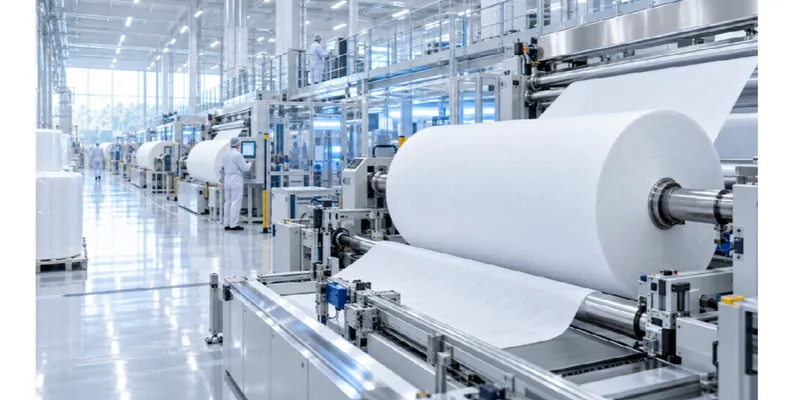
How to choose a supplier for an OEM filter program
Always begin with the end use: central HVAC, cleanroom, spray booth, air purifier, data center, industrial exhaust, or odor control. Next, pinpoint the target class and airflow. Nail down allowable pressure drop, dimensions, service life, fire requirement, and replacement method. Then, ask for a physical sample, a technical data sheet, a drawing, and a test report. Demand a production sample built using the exact same process.
Healthy Filters is a solid choice when projects demand flexible OEM engineering and custom sizes. They offer multiple media families and a supply route via a US warehouse. Their shared details easily kick off PET, polyester, non-woven, carbon, melt-blown, and fiberglass discussions.
Before final approval, verify current certificates and test conditions. Confirm production capacity, lead time, warehouse stock, warranty terms, and the exact specification of the production lot.
Source note
Product descriptions and figures in this article are based on the supplied Healthy Filters knowledge-base documents and product catalog. Product scope was cross-checked against the Healthy Filters website at https://www.hepafil.com/product/. Competitor scope was checked on September 20, 2026, using official pages from Ahlstrom at https://www.ahlstrom.com/products/, Hollingsworth & Vose at https://www.hollingsworth-vose.com/, Johns Manville at https://www.jm.com/en/filtration-separation/, Freudenberg Filtration Technologies at https://www.freudenberg-filter.com/en/, and Camfil at https://www.camfil.com/en/. Buyers should confirm current certifications and commercial terms directly with each supplier. No supplier should be selected solely from a directory listing or an unverified efficiency claim.