AI and Automation: A New Path for Citizen-Centric Manufacturing MSMEs
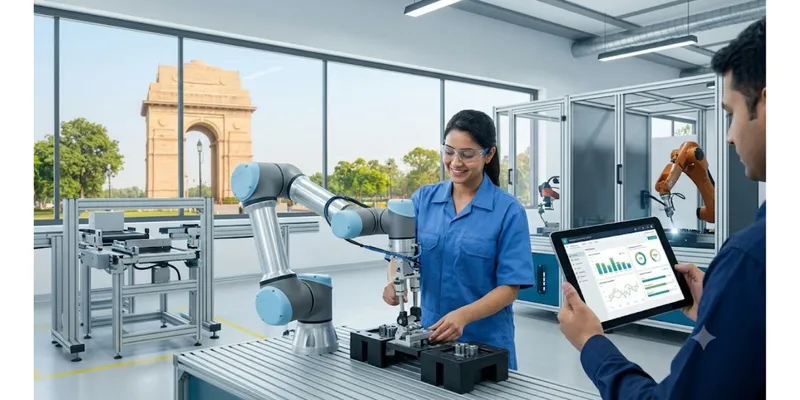
Digital technologies are emerging as practical tools for improving productivity, workforce capabilities and competitiveness across India’s manufacturing MSME sector
Manufacturing MSMEs play a significant role in employment, exports, innovation and inclusive economic growth in India. As enterprises face rising input and labour costs, changing customer requirements, global competition, quality demands and shorter delivery timelines, AI and automation are increasingly being considered as tools for modernising operations.
The focus, however, is not simply on introducing technology. A citizen-centric approach places emphasis on productivity, workplace safety, employment opportunities, workforce development and the long-term sustainability of enterprises.
AI Adoption Moves Towards Practical Manufacturing Applications
For manufacturing MSMEs, the value of AI lies in its ability to convert operational data into information that can support timely decisions. By analysing machine performance, production records and supply-chain data, AI systems can identify patterns, anticipate disruptions and support preventive action.
Automation is also being applied to repetitive and physically demanding activities. Technologies including collaborative robots, automated material-handling systems, robotic welding and intelligent packaging systems can perform defined tasks while allowing employees to concentrate on areas such as quality assurance, process optimisation, maintenance oversight and customer engagement.
The approach shifts the discussion from automation for its own sake towards technology that supports both enterprise performance and the workforce.
Agentic AI Brings Automated Decision Support
The emergence of agentic AI is another development relevant to manufacturing operations. Unlike conventional software that primarily presents information, agentic AI systems can monitor processes, assess alternatives and execute routine decisions within predefined limits.
In production planning, an AI agent can continuously assess customer orders, machine availability, workforce schedules, inventory and delivery commitments. This can help identify potential bottlenecks and support corrective action during production.
Procurement is another potential application. A procurement agent can monitor inventory, forecast material requirements, compare supplier options and prepare purchase orders for managerial approval. These capabilities can help MSMEs manage stock-outs, excess inventory and working-capital requirements.
AI Applications Can Target Productivity and Quality
AI and automation can be applied across several operational areas of manufacturing.
Predictive maintenance can help reduce equipment downtime and improve asset utilisation. Intelligent inspection systems can support quality control by identifying defects and reducing waste. AI-based inventory management can assist with working-capital optimisation, while routine administrative processes can be automated to allow finance and operations teams to focus on decision-making.
Through predictive maintenance, case studies show downtime reductions approaching 30% (source: The Times of India).
Together, such applications can contribute to more efficient manufacturing operations and stronger domestic supply chains. For the wider economy, improvements among MSMEs can support exports, industrial productivity, employment and economic growth.
Lower-Cost Technology Models Open Access for MSMEs
The adoption of AI and industrial automation is often associated with significant capital requirements. However, developments in cloud computing, Software-as-a-Service (SaaS) models and industrial AI platforms have lowered the entry barrier for businesses seeking to introduce digital technologies.
The current industrial AI ecosystem includes solutions such as:
- Siemens Industrial Copilot: An AI-powered industrial assistant designed to support engineering, maintenance and manufacturing operations, including workflow optimisation, troubleshooting and data-driven decision-making.
- PTC ThingWorx: An industrial IoT and digital twin platform supporting real-time asset monitoring, predictive maintenance and operational intelligence.
- GE Digital Asset Performance Management (APM): An industrial platform focused on predictive maintenance, asset reliability and risk management, with applications aimed at reducing downtime and extending equipment life.
- Sight Machine: A manufacturing data platform that converts shop-floor information into operational insights for quality, throughput and production performance.
- Augury: A machine health and reliability platform using AI-driven vibration and operational analysis to identify potential equipment problems before failures occur.
- Detect Technologies and Robro Systems: Indian technology companies providing industrial inspection, safety monitoring and AI-enabled quality control solutions for manufacturing environments.
For MSMEs, a phased and outcome-driven approach can begin with selected applications rather than an immediate large-scale transformation.
Possible starting points include predictive maintenance for critical equipment, AI-enabled visual inspection for quality assurance and intelligent production planning to manage resources, inventory and delivery schedules. After measurable results are achieved, enterprises can extend digital adoption to other processes and facilities.
Policy Support Can Help Accelerate Digital Adoption
A broader policy framework can support MSMEs as they introduce Industry 4.0 technologies. Possible measures include:
- Encouraging subscription-based technology procurement models to reduce upfront capital expenditure.
- Expanding targeted grant programmes and pilot-support schemes for MSMEs adopting Industry 4.0 technologies or tax free holiday till 2047.
- Establishing regional AI and manufacturing innovation centres at Universities & Industrial Training Institutes to demonstrate practical applications and provide technical guidance.
- Promoting interoperability standards to reduce vendor lock-in and support integration with existing systems.
- Supporting workforce reskilling initiatives to prepare employees for higher-value roles in digitally enabled manufacturing.
- Encouraging youth to build a promising & lucrative career in the Academia.
Such measures are intended to reduce financial and operational risks associated with technology adoption and support wider access to advanced manufacturing technologies.
Workforce Development Remains Central to AI Adoption
Technology adoption also has a workforce dimension. Concerns about job displacement require transparent communication and continued investment in workforce development.
Automation can alter existing job responsibilities while creating roles in areas such as machine supervision, quality management, digital operations, customer engagement and data-driven decision-making.
Upskilling and reskilling therefore remain important components of AI implementation. Workers /Employees at all levels must be empowered to participate in the digital economy, not be left behind by it.
A citizen-centric approach connects technological modernisation with opportunities for individuals and stronger enterprise performance.
Public Institutions and Industry Have a Role
Responsible AI adoption across MSMEs requires coordination among policy makers, Central and State Public Sector Enterprises, financial institutions, technology providers and academia.
Strengthening skilling across all levels of the manufacturing workforce can help smaller enterprises adopt emerging technologies. A feedback based enabling ecosystem can also support implementation based on industry requirements.
Public policy can contribute through pilot programmes supported by CSR interventions, technology demonstration centres and industry-wide standards aimed at improving interoperability and reducing implementation costs.
Towards a Citizen-Centric Manufacturing Future
AI and automation are increasingly becoming accessible to manufacturing MSMEs rather than remaining limited to large corporations. Their adoption can be approached through phased investments, workforce development and practical applications based on grass root feedback from the Industry.
The future direction for MSMEs involves combining digital technologies with skills development and citizen-centric outcomes. Such an approach can help enterprises strengthen operations while supporting productive and rewarding employment opportunities.
India’s manufacturing sector is therefore entering a period in which the effectiveness of AI and automation will depend not only on technology adoption, but also on how enterprises, workers, institutions and policymakers participate in the transition.
By Manoj Lal