AEPC Backs India’s USD 1 Trillion Export Target, Submits Key Apparel Sector Proposals at Board of Trade Meeting
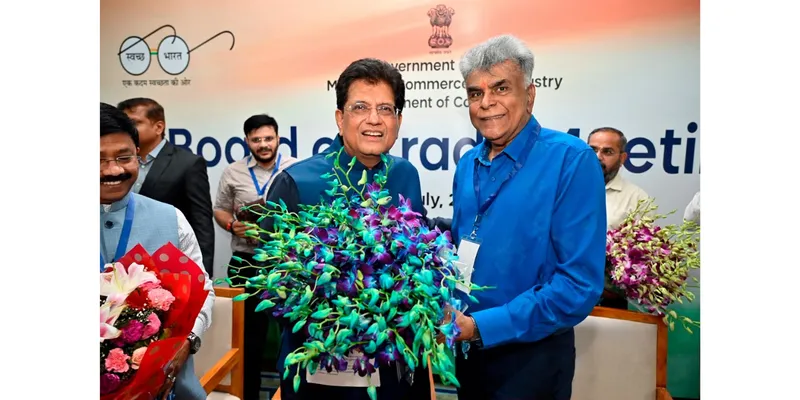
Commerce Minister Shri Piyush Goyal outlines FY 2026-27 export goal as AEPC recommends policy measures to strengthen apparel exports, sustainability and manufacturing competitiveness.
The Board of Trade (BoT) meeting, held in New Delhi on July 3, brought together representatives from States, Union Territories, Export Promotion Councils, and senior industry leaders to discuss strategies for expanding India's exports and enhancing trade competitiveness.
During the meeting, Union Commerce & Industry Minister Shri Piyush Goyal set a target of achieving USD 1 trillion in exports during FY 2026-27 under the leadership of Hon'ble Prime Minister Shri Narendra Modi.
The Board acknowledged and supported the export target while discussing measures to accelerate export growth, maximise opportunities arising from recently concluded Free Trade Agreements (FTAs), and strengthen India's position in global markets.
Addressing the meeting, Shri Piyush Goyal stated that India has concluded or operationalised Free Trade Agreements (FTAs) with 38 countries, bringing nearly 65 per cent of the developed world under India's FTA network and expanding market access for Indian exporters. He encouraged stakeholders to work towards achieving higher export growth.
Welcoming the announcement, AEPC Chairman Dr. A. Sakthivel expressed support for the Government's export strategy and reaffirmed the apparel sector's commitment to contributing towards the national export target.
Dr. A. Sakthivel said:
"We welcome the Hon'ble Commerce Minister's vision for India's exports. With expanded market access through FTAs and continued policy support, we are confident that the apparel sector will make a significant contribution towards achieving the USD 1 trillion export target. AEPC and the industry stand fully committed to working closely with the Government to deliver on this national mission."
During the Board of Trade meeting, Dr. A. Sakthivel presented a set of recommendations intended to improve the competitiveness of the Indian apparel industry and support export growth.
The proposals submitted by AEPC include:
- Enhancement of the Interest Subvention Scheme from 2.75 per cent to 5 per cent, extending coverage to all exporters and removing the annual cap.
- Relief under the EPCG Scheme through relaxation of Average Export Obligation requirements for exporters affected by market disruptions, particularly those dependent on the US market.
- Continuation of the RoSCTL Scheme for at least the next 3 years, along with extending benefits to exporters operating under Advance Authorization, EOU and SEZ schemes.
- Creation of a dedicated Green Transformation Fund offering long-term soft loans for sustainability-related investments and ESG compliance.
- Introduction of a Special Scheme for the Apparel Sector (SSAS) based on self-ratification of input-output norms to simplify duty-free fabric imports, reduce compliance requirements and improve ease of doing business.
- Enhanced government support for worker hostels and affordable housing infrastructure across major apparel manufacturing clusters.
- Expedited implementation of PM MITRA Parks with a dedicated focus on Man-Made Fibre (MMF) production.
- Mandatory Registration-cum-Membership Certificate (RCMC) for availing export promotion schemes to strengthen institutional support and improve industry representation.
The recommendations were presented as part of AEPC's proposals to support the growth of apparel exports and strengthen the sector's contribution towards India's export objectives.