Advance Syntex Limited
1. Introduction
Advance Syntex Limited (ASYL) is a micro-cap on BSE, specializing in packaging and textile products since 1989. It's located in Vadodara, Gujarat, and makes metallic yarn, coated metalized films, glitter powder, stamping foils, and kids' craft kits under Midas Glitter which are sold here and abroad.
Listed via IPO on BSE in 2016, it peaked at Rs. 79 crore revenue in FY19. Business tanked after that, with sales near zero in FY24–25. It's an NPA for lenders, and auditors doubt it can continue as a going concern.
The report reviews background, promoters, and FY22–FY24 finances using Screener.in and BSE filings only.
2. Company Overview
Background and History
Advance Syntex Limited started as a private company in Gujarat back in 1989. It switched to public limited status in November 2015 with a new certificate. They listed on BSE's main board on July 1, 2016. The registered office is at Vadodara, Gujarat.
Business and Products
ASYL makes and sells metallic yarn, lacquer-coated aluminium metalized polyester film, glitter powder, hot stamping foils, and craft items. They sold domestically and exported. Production happens at the Vadodara plant, but it seems to have stopped by FY24 sales fell to Rs. 1 crore then zero in FY25.
Current Status
BSE updates from Feb 2026 and Nov 2025 show auditors giving adverse opinions for several quarters, doubting the company can survive. Lenders marked it NPA, and assets are up for sale under SARFAESI. A huge Rs. 17.51 crore hit showed up in Q4 FY25 'other income' (negative), tanking equity—book value went to Rs. -11.7 per share in FY25.
3. Promoter Introduction
Promoters hold steady at 59.76% since FY19, with no pledging. From BSE annual reports and MCA filings, here's the key board:
Name | Designation | Note |
|---|---|---|
Bhavan Dhirendra Vora | Managing Director | Main promoter; runs daily ops |
Darshana Devang Vora | Director | Promoter family |
Nandishkumar Vinodray Gandhi | Independent Director | Non-executive independent |
Himesh Ochhavlal Shah | Independent Director | Non-executive independent |
Praful Ramanlal Pandya | Independent Director | Non-executive independent |
Ronojoy Basu | Independent Director | Non-executive independent |
Ashishkumar Govindlal Shukla | Director | Non-executive |
Table 1: Board of Directors
Holding stayed at 59.76% since FY19, no dilution or sales. But sticking around while business crashes doesn't reassure much, especially with the company's mess.
4. Financial Statement Analysis
4.1 Income Statement (FY22–FY24)
Sales crashed from Rs. 29cr (FY22) to Rs. 19cr (FY23) to Rs. 1cr (FY24). Losses since FY21, operating profit negative from FY22. Net loss widened: -4cr to -6cr. Interest is near zero now, but no revenue left. No dividends paid.
Particulars | FY22 | FY23 | FY24 |
|---|---|---|---|
Revenue | 29 | 19 | 1 |
Expenses | 29 | 22 | 2 |
Op. Profit | 0 | -3 | -1 |
OPM% | 1% | -15% | -143% |
Interest | 3 | 0 | 0 |
Depreciation | 1 | 1 | 0 |
Net P/L | -4 | -2 | -6 |
EPS | -3.76 | -1.55 | -5.61 |
Table 2: Income Summary FY22-24 (Screener.in)
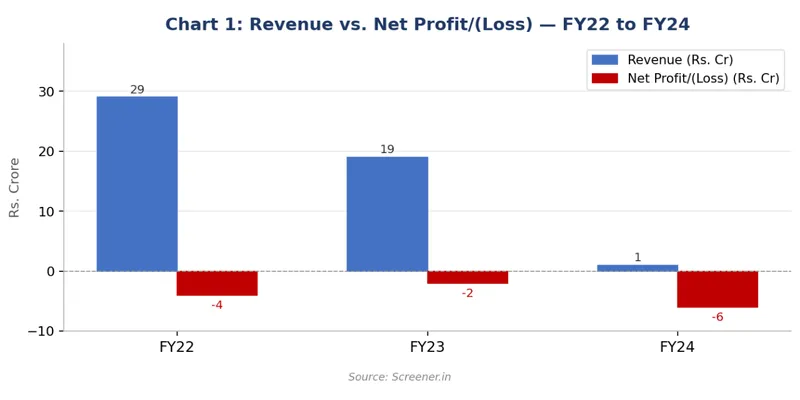
Chart 1: Revenue vs. Net Profit/(Loss) — FY22 to FY24 (Source: Screener.in)
4.2 Balance Sheet (FY22 – FY24)
Total assets dropped from Rs. 61 crore in FY22 to Rs. 41 crore in FY24 as business shrank. Equity fell from Rs. 14 crore to Rs. 6 crore, then went negative at Rs. -13 crore by FY25. Borrowings eased from Rs. 42 crore to Rs. 33 crore. Fixed assets slid from Rs. 6 crore to Rs. 3 crore through depreciation and sales.
Particulars (Rs. Crore) | FY22 | FY23 | FY24 |
|---|---|---|---|
Equity Capital | 11 | 11 | 11 |
Reserves | 3 | 1 | -5 |
Shareholders' Equity | 14 | 12 | 6 |
Borrowings | 42 | 35 | 33 |
Other Liabilities | 5 | 3 | 3 |
Total Assets | 61 | 50 | 41 |
Fixed Assets | 6 | 3 | 3 |
Table 3: Balance Sheet Summary — FY22 to FY24 (Source: Screener.in)
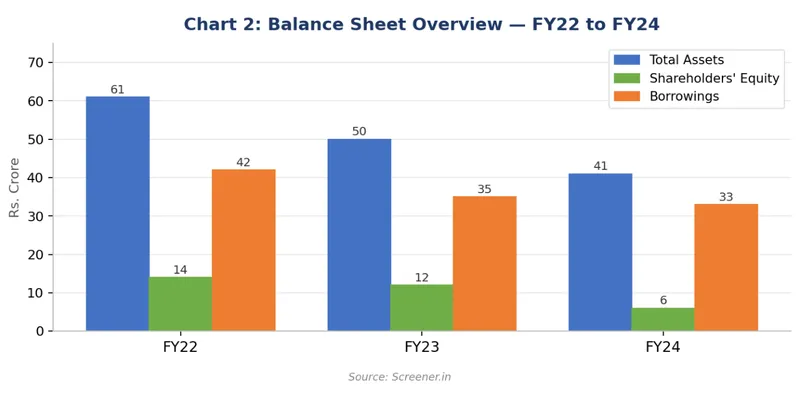
Chart 2: Balance Sheet Overview — FY22 to FY24 (Source: Screener.in)
4.3 Cash Flow (FY22 – FY24)
Operations cash flow started negative at -Rs. 5 crore in FY22 from working capital pileup. It flipped positive in FY23 (+Rs. 2 crore) and FY24 (+Rs. 7 crore) as they sold off debtors and inventory but this isn't real business health, just asset liquidation. The huge Rs. 66 crore financing inflow in FY24 looks odd, probably from loan restructures.
Cash Flow (Rs. Crore) | FY22 | FY23 | FY24 |
|---|---|---|---|
Operating | -5 | 2 | 7 |
Investing | 1 | 3 | 0 |
Financing | 4 | -6 | 66 |
Net Change | -1 | -1 | 73 |
Table 4: Cash Flow Summary — FY22 to FY24 (Source: Screener.in)
4.4 Key Ratios
Ratio | FY22 | FY23 | FY24 | Observation |
ROCE % | -1% | -7% | -3% | Negative — no returns |
OPM % | 1% | -15% | -143% | Severely negative |
Debtor Days | 283 | 387 | 6,743 | Practically uncollectible |
Inventory Days | 397 | 473 | 5,345 | Stock not moving |
Cash Conv. Cycle | 616 | 819 | 11,853 | Completely broken |
EPS (Rs.) | -3.76 | -1.55 | -5.61 | Persistent losses |
Book Value/Share | ~Rs.11 | ~Rs.11 | ~Rs.5 | Eroding rapidly |
ROCE stayed negative all three years, the company destroyed capital instead of earning returns on it. OPM crashed from 1% to -143% in FY24, meaning operations cost way more than they brought in, which can't last. Debtor days shot to 6,743 in FY24 which is not normal, just shows unpaid bills likely gone bad. Inventory days at 5,345 means stuff sits unsold in warehouses since production or sales stopped. Cash conversion cycle hit 11,853 days, proving the whole business cycle broke and money's stuck. EPS worsened to -Rs. 5.61, book value dropped from Rs. 11 to Rs. 5, then went negative at -Rs. 11.7 by FY25, so liabilities beat assets and it's insolvent. These numbers don't show struggle, they show a company that's stopped working.
5. Key Insights and Interpretation
ASYL worked fine until FY19, hitting Rs. 79 crore revenue and 17% ROCE. Trouble began FY20 with sales drops and working capital issues. COVID probably sped up the mess in FY21. By FY22–23, distress was obvious, debtor days at 283 and 387 showed collections failed, inventory stacked up. FY24 sales basically vanished.
The Ratio Problem
Ratios show total breakdown. Cash conversion at 11,853 days in FY24 isn't high working capital, it's proof business halted, leaving bad debts and dead stock. ROCE turned negative FY22 onward. Book value fell from Rs. 11/share to zero, now negative.
NPA and SARFAESI
BSE filings confirm lenders called it NPA and started SARFAESI to sell assets for recovery. They auctioned Rs. 4.54 crore and Rs. 0.66 crore worth lately. Huge risk for anyone still involved.
Future Outlook
No recovery in sight from the data. FY25 revenues zero for quarters, book value negative, auditors doubt survival. Needs a major bailout, new money, or sale—or it's done. Super high-risk stock, total uncertainty.
6. Conclusion
Advance Syntex Limited used to make decent revenue with okay margins. From FY20 to FY24, everything fell apart, sales dropped, losses piled up yearly, working capital ratios stopped making sense, and loans went into default. By FY25, book value went deep negative, banks are grabbing assets through SARFAESI, and auditors doubt it can survive.
For investors, this stock's way too risky. Market cap around Rs. 6 crore feels like pure speculation, no earnings, no business left, negative net worth. Without a clear turnaround plan or new management with cash, it's unsafe at any price.
Data Sources
1. Screener.in
2. BSE India