A Study on customer experience of lifestylestores.com to Optimize & improve conversion rates
Thejas Vitta, Post Graduate Academic Scholar, Department of Fashion Management Studies, National Institute of Fashion Technology, Ministry of Textiles, Govt of India, Daman Campus.
Dr. Vidhu Sekhar P, Assistant Professor, Department of Fashion Management Studies, National Institute of Fashion Technology, Ministry of Textiles, Govt of India, Daman Campus.
Abstract
The study examines customer experience on Lifestylestores.com with a view to find out opportunities to maximize conversion rates and marketing profitability. The research combines quantitative approaches through a systematic questionnaire survey of 120 respondents with convenience sampling. Statistical measures like Pearson's correlation and frequency distribution were used to analyze customer perceptions at several digital touchpoints like website navigation, product filtering, checkout, and satisfaction. The findings throw light on the importance of digital transformation, user experience, and personalized experiences for enhancing customer satisfaction, loyalty, and repeat business. The correlation analysis also indicates a strong correlation between gender and perceptions of the information and payment.
Introduction
Digital marketing leverages online and offline digital channels—like social media, email, SEO, and even SMS or digital billboards—to connect with audiences. Unlike traditional methods, it offers real-time engagement, measurable results, and precise targeting, making it cost-effective and accessible for businesses of all sizes. Tactics like affiliate, content, mobile, and email marketing each play unique roles in customer conversion and brand loyalty.
Customer experience (CX) is now central to e-commerce success. In a crowded digital market, seamless shopping journeys, fast support, and personalization drive loyalty and reduce cart abandonment. The pandemic accelerated digital adoption, shifting consumer focus from just buying to enjoying the shopping experience itself. Modern customers expect intelligent search, personalized recommendations, and consistent brand interaction. A positive CX leads to repeat purchases, strong word-of-mouth, and lasting trust—while poor CX quickly spreads through negative reviews. As digital transformation speeds up, brands that invest in CX stand out, grow faster, and build meaningful, long-term relationships with their audience.
Literature Review
Nuseir, M. T., et al., (2023) the review emphasizes how social media, particularly Facebook, enhances customer experience through low-cost, peer-supported engagement. It highlights the importance of digital strategies like e-coupons and product configurators in building brand trust and user satisfaction. A strong digital presence is deemed crucial for reputation and success. Figueiredo, N., et.al., (2025) explores how digital marketing simplifies complex consumer behavior through personalized experiences, user-friendly interfaces, and emotional connections. It also stresses the impact of social media and e-WOM on purchase decisions, suggesting technologies like AI and AR offer new paths for targeted, trust-building marketing strategies. Kearl, M (2024) Kearl outlines how digital transformation reshapes customer experience through tools like AI, real-time feedback, and omnichannel engagement. With innovations like chatbots and self-service platforms, businesses can meet rising consumer expectations by offering seamless, personalized, and data-driven interactions across multiple digital touchpoints.
Medallia Research (2024) details the benefits of digital transformation in improving personalization, omnichannel consistency, and data-driven marketing. It stresses that customized experiences enhance loyalty and influence purchasing decisions, backed by research showing consumers’ strong preference for brands offering relevant and personalized interactions. Ranjbar, S. E., & Vares, H(2023) analyze how digital tools like SEO, mobile marketing, and email marketing enhance customer satisfaction in online stores. They stress the role of high-quality content and targeted messaging in boosting engagement, while calling for digital marketing to be embedded in corporate culture for sustained success.
Primary Objective
A Study on customer experience of lifestylestores.com to Optimize & improve conversion rates for marketing profitability.
Secondary Objectives
- To identify and analyse key pain points in the payment and checkout process, including confusion and limited payment options, which over 84% of users rated below average.
- To evaluate user experience with website navigation, product categorization, and search filters, as these directly affect product discoverability and were rated average to poor by a large portion of respondents.
- To assess overall customer satisfaction with the Lifestyle online shopping platform, especially considering that only 16.6% rated the experience as excellent.
- To explore the effectiveness of customer support and chatbot responsiveness, as 66% of users reported dissatisfaction, impacting trust and resolution of issues.
- To understand how frequent price comparisons with other platforms impact purchase decisions, highlighting the need for stronger value propositions or urgency triggers.
Research Design
The research follows a descriptive design, aimed at understanding user perceptions and satisfaction levels with Lifestyle’s online shopping platform. The study specifically focuses on evaluating areas such as website navigation, search and filter functionalities, the payment process, and customer support responsiveness. By identifying the challenges customers face during their shopping journey, the research intends to highlight areas where Lifestyle can enhance the user experience.
A quantitative method was adopted for this study to ensure measurable and comparable results. Data was collected through a structured online questionnaire, which included multiple-choice and rating-scale questions. This allowed participants to express their opinions on various aspects of the website’s performance, from browsing convenience to post-purchase support.
The questionnaire was distributed digitally to a target audience that reflects Lifestyle’s core customer base — primarily individuals between the ages of 18 and 35. This demographic was chosen because it represents a significant portion of Lifestyle’s online consumers. The survey successfully gathered responses from over 60 participants, providing a broad enough sample to analyze patterns and draw insights.
To maintain reliability and ease of analysis, all questions were standardized, and responses were kept anonymous. The data collected was then examined using basic statistical tools, including percentages and frequency distribution, to uncover key trends in user behavior and satisfaction. The research design not only helped in collecting actionable feedback but also ensured that the insights are rooted in real customer experiences. The findings highlight critical problem areas such as a complicated payment process, poor filtering options, and underperforming customer support — all of which directly impact user retention and brand trust.
By using a structured and focused approach, the study provides a clear picture of the current online experience offered by Lifestyle and outlines customer-driven priorities for improvement.
Data Analysis and Interpretation
CORRELATION TEST
H0 - There is no significant relationship between the variables GENDER & INFORMATION & PAYMENT PROCESS
H1 - There is a significant relationship between the variables GENDER & INFORMATION & PAYMENT PROCESS
Correlation
Pearson's Correlations | |||
Variable |
| Gender | Information & Payment Process |
1. Gender | Pearson's r | — |
|
| p-value | — |
|
2. Information & Payment Process | Pearson's r | -0.193 | — |
| p-value | 0.035 | — |
Inference: Since p = 0.035 < alpha value 0.05, we reject the null hypothesis. Therefore, there is a significant relationship between the variables – Gender, Information and Payment Process. H1 is Accepted.
Findings
Most respondents were aged between 18–35. Gender distribution was balanced, with slightly more females (56. 67%) than males (43. 33%). 36. 6% of respondents shop once a month, while 28. 3% shop once every 3 months. 38. 3% had a moderately positive perception of online shopping; 35. 8% had a highly positive perception.
Over 51% rated the information & payment process as poor, indicating a key area for improvement. Website navigation, product categorization, and filter options were generally rated average to below average, showing user dissatisfaction. Only 16. 6% rated the overall shopping experience as excellent, while 43. 3% rated it as moderate.
Over 84% of respondents rated the payment process below average, citing confusion during checkout and lack of payment options. 43% were dissatisfied with search results and filtering options, impacting product discoverability.
74% of users compared prices with other platforms before purchase, implying Lifestyle’s perceived lack of urgency to buy. 66% reported dissatisfaction with customer support and chatbot responsiveness, impacting trust and issue resolution.
Suggestions
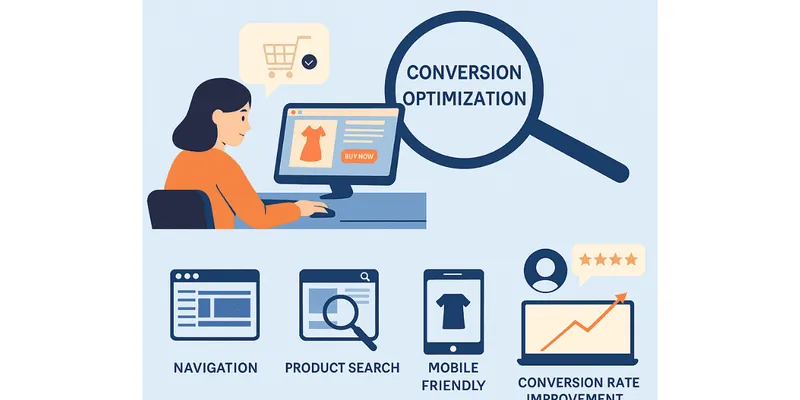
Lifestyle needs to enhance Website Navigation & Filter Options by implementing better and more filters for faster product discovery. They can upgrade search functionality with AI-driven results and personalization. Improve mobile responsiveness and visual hierarchy to guide users more naturally through the customer journey. Train chatbot systems to be more contextually aware. Offer faster human escalation during checkout or post-purchase queries.
Collect real-time feedback from customers post purchase to monitor satisfaction. Deploy AI-driven product recommendation based on browsing and buying history. Improve product descriptions with fabric details, size charts, and styling tips & add product videos, customer photos, and Q&A sections for engagement.
Conclusion
This study concludes that while LifestyleStores.com has established a significant online presence, its current customer experience falls short in several crucial areas, particularly around the payment process and site usability. The correlation between gender and dissatisfaction with payment flows underlines the importance of personalized and inclusive digital experiences. By addressing the key concerns related to navigation, design, product filters, and customer support, the brand can significantly improve conversion rates and marketing ROI. Investing in customer experience management and digital transformation will not only enhance satisfaction but also secure long-term competitive advantage in India’s evolving e-commerce landscape.
References
Nuseir, M. T., El Refae, G. A., Aljumah, A., Alshurideh, M., Urabi, S., & Al Kurdi, B. (2023). Digital marketing strategies and the impact on customer experience: A systematic review.
Figueiredo, N., Ferreira, B. M., Abrantes, J. L., & Martinez, L. F. (2025). The role of digital marketing in online shopping: A bibliometric analysis for decoding consumer behaviours. Journal of Theoretical and Applied Electronic Commerce Research, 20(1), 25. https://doi.org/10.3390/jtaer20010025
Kearl, M. (2024). The impact of digital transformation on customer experience.
Ranjbar, S. E., & Vares, H. (2023). The effect of digital marketing on customer satisfaction of online stores. Journal of Namibian Studies: History Politics Culture, 37, 903–918.
McAuliffe, W. (2024). Ecommerce customer experience: How to create great experiences.