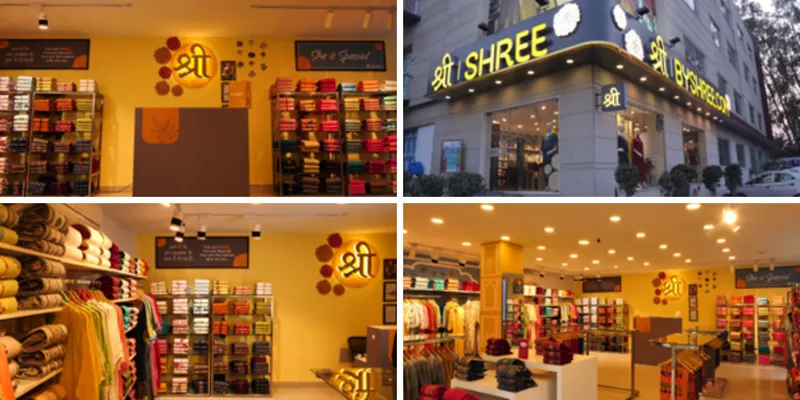
A Conversation with Sandeep Kapoor: The Fabric Guru, on the Indian Ethnic Wear Value Chain
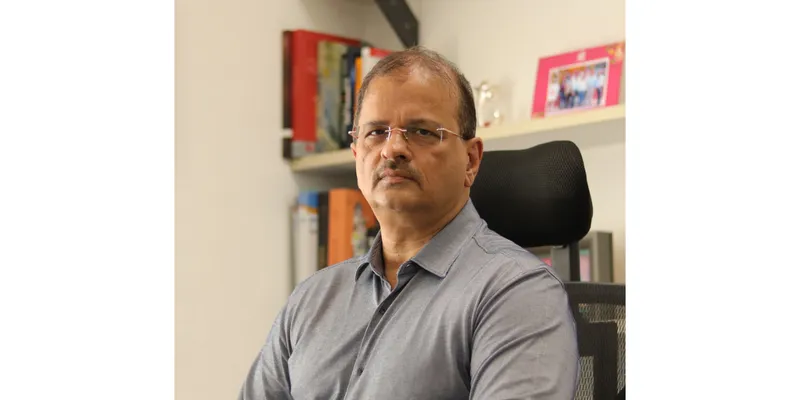
The FVC Media Team had the privilege to speak with Sandeep Kapoor, Chairman & Managing Director of SHR Lifestyles Pvt. Ltd., the company behind the women’s ethnic wear brand SHREE. A textile professional whose journey began in the late 1980s, Sandeep Kapoor has spent over three decades working closely with fabric—right from fibre sourcing to real-life wear performance. Known within the industry for his hands-on understanding of textiles, a trait that has earned him the informal title of “Fabric Guru,” his work continues to focus on creating comfortable, reliable ethnic wear rooted in India’s rich manufacturing and textile ecosystem.
Indian ethnic wear has shown resilience even during consumption slowdowns. From a value chain view, how does this category support local economies beyond big cities?
Ethnic wear is not purchased occasionally in India; it is a part of their daily lives. They might be more frugal in their spending, but they do not stop purchasing even when the economy is not doing well. It is only the amount spent or the frequency that changes, not the demand.
Coming to the value chain, this particular category of clothing provides employment in a number of stages: trade in fabrics, weaving, processing, stitching, transportation, storage, and retail. A number of these activities are not only present in large cities but also in Tier-2 and Tier-3 cities and famous textile destinations. Women are also employed in this chain, in many cases through home-based or small-scale units.
Budget 2026 is more about textile destinations, MSMEs, skill development, and regional infrastructure. This is how the sector actually functions. From a planning perspective, maintaining the local economy and understanding store-level behaviour is more important than what is happening at the national level. Smaller towns tend to reflect changes in how consumers feel before large cities.
Value ethnic wear is often seen as crowded and commoditised. What keeps a brand like SHREE relevant over time?
When viewed from the outside, many products resemble each other, but the actual difference is visible only after use. “Ethnic wear is not about following trends; it is about supporting a routine”.
At Shree, our fabric is the strongest, most consistent focus—no compromises. Customers have told us that our clothes last for years: the fabric retains its feel, and colours don’t bleed or fade. When a woman wears an outfit regularly, and it withstands many washes, trust builds up naturally.
“Consistency builds trust quicker than reinvention”. We don’t set out to please everyone. Our consumer is a woman who values comfort, fit, and fair prices.
She wants something predictable, nothing surprising. Relevance is found in doing the basics well every season—sourcing, fabric, sizing, and retail execution in the right way.
How do fabric science and climate suitability influence your sourcing decisions?
The Indian climate is quite diverse, and the performance of fabrics differs from place to place. A fabric that is suitable for the dry climate of the north may not be that comfortable in the humid climate of the coastal regions. So, because of this climatic difference, sourcing cannot be standardised.
Comfort is what drives repeat business. If a garment does not perform well in terms of comfort, it will barely sustain for more than a season. We are concerned with breathability, touch, colourfastness, and ease of washing. These are the result of market data and consumer feedback. Testing and safety of chemicals are non-negotiable. We can afford to invest in fabric controls and still keep our prices down, which is in line with the Budget’s emphasis on fibre quality and infrastructure.
Where can environmental impact be reduced without making products expensive?
Much of the environmental impact occurs even before production begins. Ineffective design planning leads to increased fabric consumption and cutting waste, while effective sampling and pattern control minimise waste and expenses.
Water consumption in dyeing and processing is another important area. The greatest benefits can be realised through disciplined process management, rather than through sustainability initiatives. Small changes, when implemented on a large scale, can be very effective. Effective practices will not work unless they lead to greater efficiency. The Budget 2026 emphasis on modernised clusters and shared facilities will help improve standards without making production costly.
The ethnic wear industry is highly dependent on MSMEs. What are the major risks in the current supply chain, and how does trade policy influence it?
Ethnic wear is heavily dependent on small and medium suppliers, who possess very specific skills. This also makes the supply chain quite fragile. Usually, risks arise from raw material price variability, capacity constraints, or day-to-day operations. Small suppliers do not possess the capacity to withstand sudden shocks.
This is why long-term relationships are more important than short-term pricing. If suppliers are aware of volumes, better forecasting, and timely payments, the entire system becomes quite stable. Most of the Budget initiatives on MSME liquidity, faster payments, and access to finance have directly tackled these issues.
Free Trade Agreements may impact landed costs, but they don't substitute manufacturing. Indian manufacturing is still very important for speed, flexibility, and quality.
Fashion cycles are getting shorter, but mistakes in ethnic wear are costly. How do you balance speed with control?
Speed is necessary, but speed without systems results in unavoidable costs. Processes are not intended to slow down teams. They are intended to avoid rework, overproduction, and overstock with high markdowns.
Data is what helps us make decisions on what not to make. Sometimes, that’s more important than what to pursue. In ethnic wear, physical stores continue to be a robust feedback mechanism for fit, fabric, and usage. Technology is most effective when it’s used to complement human decisions, not replace them.
Sustainability is always considered to be a luxury concept. Can a value-based ethnic wear brand be responsible at a mass level?
Sustainability functions as an adjective because it describes a method for making daily decisions. Consumers prefer durable clothing which feels comfortable and maintains its original design after extended use. The definition of responsible products includes items which remain functional for multiple years. Sustainable fashion requires accessible fashion solutions which deliver extended value instead of temporary budget-friendly pricing. The implementation of minor process modifications produces substantial impacts when applied to extensive operational scales. The Budget supports efficiency-driven expansion as its primary growth strategy instead of promoting higher consumption levels.
What will happen to employment in the textile and retail sectors with the advancement of systems and technology?
The textile industry will remain a business that depends on human workers. The adoption of technology creates new work functions while it maintains the requirement for human workers to perform their duties. The processes will become more understandable while the personnel will acquire higher proficiency levels. The existing workforce should be developed through training initiatives because this method proves to be more effective than continuously hiring new employees. When people understand the systems, productivity increases, and mistakes are reduced.
Ethnic wear often serves multiple generations. How do you manage different expectations?
Comfort and fit matter across generations. The difference lies in styling and usage. Younger consumers prefer versatility and everyday wear.
We have maintained the same core sizes for over a decade. Customers trust that consistency. With growing health awareness and inclusivity, we added extra small and triple XL options. These were additions, not silent changes. Maintaining size integrity is important to retain long-term trust. Many brands lose trust when sizes shift quietly, and we have consciously avoided that.
What guides your product and expansion strategy going forward?
Growth will come from understanding the consumer, not from size. Enhancing product offerings, sell-through, and repeat sales is more important than fast growth.
We feel that Tier 2 and Tier 3 cities will continue to fuel growth because ethnic wear is a part of their daily lives. Formats will change over time, but comfort, fabric, and reliability will continue to remain the same.
You often mentioned earlier about the journey of a garment rather than just the label. Why is this viewpoint important today?
The product is determined long before it ever gets to a store. The true value is in the selection of fabrics, the performance of fibres over time, processing, testing, and developing it into a wearable product. The labels come way later. Process precedes labels.
With time, as customers, collaborators, and young professionals, once they understand the fabric process and the emphasis on performance, comfort, and durability of the product, many have referred to me as “Fabric Guru” Sandeep Kapoor. This usually follows a discussion on why a fabric lasts for so many years, why colours do not bleed, and why consistency is more important than fast fashion.
I accept this feedback as a reminder and not a moniker. As more people become aware, consumers will come to judge ethnic wear not by its appearance but by its process of manufacture. Indian ethnic wear can command respect worldwide if brands remain transparent, disciplined, and focused on fabric and process.