A Comprehensive Guide to Choosing the Right Embroidery Machine for Your Business
Embroidery has evolved from a traditional craft into a thriving industry, thanks to advancements in technology and the growing demand for customized textiles. Whether you’re starting a new embroidery business or upgrading your current equipment, choosing the right embroidery machine is one of the most critical decisions you’ll make. The right machine can enhance productivity, improve the quality of your work, and ultimately increase your profitability. However, with so many options available in the market, selecting the right embroidery machine can be overwhelming. This comprehensive guide will walk you through the key factors to consider when making your decision.
1. Understand Your Business Needs
Before diving into the technical specifications of embroidery machines, it’s essential to evaluate your business requirements. Ask yourself the following questions:
- What is the scale of your business? Are you a small startup, a mid-sized business, or a large-scale production house?
- What type of products will you be embroidering? Will you focus on apparel, caps, bags, home textiles, or a combination of these?
- What is your expected production volume? Do you need a machine for occasional use, or do you require industrial-grade equipment for continuous operation?
Understanding your business needs will help you narrow down your options and focus on machines that align with your goals.
2. Types of Embroidery Machines
There are several types of embroidery machines available, each designed for specific applications. Here’s a breakdown of the main categories:
a) Single-Head Embroidery Machines
Single-head machines are ideal for small businesses or startups. They have one embroidery head and are designed to work on one item at a time. These machines are versatile and can handle a wide range of projects, from clothing to accessories. They are perfect for businesses that produce custom, one-off designs or small batches.
b) Multi-Head Embroidery Machines
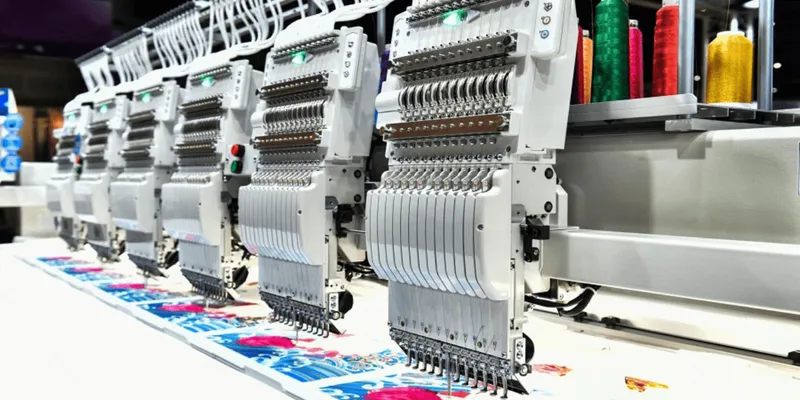
Multi-head machines have multiple embroidery heads, allowing you to embroider several items simultaneously. These machines are best suited for medium to large-scale businesses that need to produce high volumes of embroidered products efficiently. For example, a 4-head machine can embroider four identical designs on four items at the same time, significantly boosting productivity.
c) Industrial Embroidery Machines
Industrial embroidery machines are heavy-duty and designed for continuous operation in high-production environments. They often come with advanced features such as automatic thread trimming, large embroidery fields, and faster stitching speeds. These machines are ideal for large-scale manufacturers.
d) Specialized Embroidery Machines
Some machines are designed for specific applications, such as cap embroidery, 3D puff embroidery, or sequin embroidery. If your business focuses on niche markets, investing in a specialized machine can give you a competitive edge.
3. Key Features to Consider
When comparing embroidery machines, pay close attention to the following features:
a) Embroidery Area
The embroidery area determines the maximum size of the design you can create. If you plan to work on large designs, such as jackets or banners, choose a machine with a larger embroidery field. For smaller projects, such as caps or patches, a standard embroidery area will suffice.
b) Stitch Speed
Stitch speed is measured in stitches per minute (SPM). Faster machines can complete projects more quickly, which is crucial for high-volume production. However, keep in mind that higher speeds may require more precise maintenance to ensure consistent quality.
c) Number of Needles
The number of needles on an embroidery machine determines how many thread colors can be used in a single design without manual thread changes. Single-needle machines require frequent thread changes, while multi-needle embroidery machines (6, 8, or even 15 needles) allow for more complex, multi-colored designs with minimal interruptions.
d) Ease of Use
Modern embroidery machines often come with user-friendly features such as touchscreen interfaces, built-in design libraries, and USB connectivity for importing custom designs. These features can save time and reduce the learning curve, especially for beginners.
e) Compatibility with Design Software
Ensure that the embroidery machine is compatible with popular design software, such as Wilcom, Hatch, or Brother’s PE-Design. This will allow you to create or edit designs easily and upload them to the machine.
f) Automatic Features
Look for machines with automatic thread trimming, tension adjustment, and color changes. These features reduce manual intervention, improve efficiency, and ensure consistent quality.
g) Durability and Maintenance
Invest in a machine from a reputable brand known for durability and reliability. Consider the availability of spare parts, the quality of customer support, and the frequency of maintenance required.
4. Budget Considerations
Embroidery machines come in a wide price range, from a few hundred dollars for basic models to tens of thousands for industrial-grade equipment. While it may be tempting to opt for the cheapest option, remember that quality and reliability are crucial for long-term success. Consider the following tips:
- Start Small: If you’re a new business, start with a single-head machine and upgrade as your business grows.
- Invest Wisely: For established businesses, invest in high-quality machines with advanced features to improve productivity and reduce downtime.
- Factor in Additional Costs: Don’t forget to budget for accessories, software, maintenance, and training.
5. Test Before You Buy
Whenever possible, test the embroidery machine before making a purchase. Many dealers offer demonstrations or trial periods. Testing the machine will give you a better understanding of its capabilities, ease of use, and compatibility with your workflow.
6. After-Sales Support
After-sales support is a critical factor to consider, especially for businesses that rely heavily on their embroidery machines. Ensure that the manufacturer or dealer provides:
- Comprehensive training for operating the machine
- Technical support for troubleshooting issues
- Easy access to spare parts and accessories
- Regular software updates
7. Future-Proofing Your Investment
As your business grows, your embroidery needs may change. Choose a machine that can be upgraded or expanded to meet future demands. For example, some multi-head machines allow you to add additional heads, while others offer modular designs for enhanced flexibility.
Conclusion
Choosing the right embroidery machine for your business is a significant investment that requires careful consideration. By understanding your business needs, evaluating the types of machines available, and focusing on key features, you can find a machine that aligns with your goals and budget. Remember to prioritize quality, reliability, and after-sales support to ensure long-term success. With the right embroidery machine, you’ll be well-equipped to create stunning designs, meet customer demands, and grow your business in the competitive world of embroidery.