92M Tons of Textile Waste: 2026 Statistics, Costs & Recycling Insights
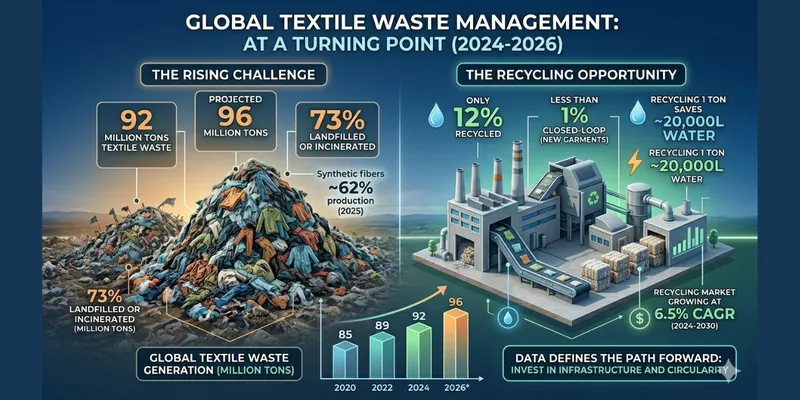
The global textile industry is at a turning point. As highlighted in recent market intelligence by Dataintelo, rising consumption, fast fashion cycles, and limited recycling infrastructure have pushed textile waste to unprecedented levels. In 2026, managing textile waste is no longer just an environmental concern—it is a measurable economic and operational challenge backed by hard data.
From 92 million tons of annual waste to recycling rates below 1% for closed-loop systems, the numbers reveal both the scale of the problem and the opportunity for transformation. This article presents a comprehensive, data-driven breakdown of textile waste management, focusing on recent statistics (2022–2026), cost comparisons, environmental impact, and future projections.
Key Statistics at a Glance
• 92 million tons of textile waste generated globally (2024)
• Projected 96 million tons by 2026
• 73% of textile waste landfilled or incinerated
• Only 12% recycled; less than 1% into new garments
• Textile industry contributes ~10% of global CO₂ emissions
• Synthetic fibers account for ~62% of production (2025)
• Recycling 1 ton saves ~20,000 liters of water
• Disposal cost: $75–$150 per ton (2024)
• Recycling market growing at 6.5% CAGR (2024–2030)
• Textile waste per capita: 11–13 kg annually (global avg.)
1. The Growing Volume of Textile Waste (2020–2026)
Textile waste generation has shown consistent growth over the last six years:
Year | Waste Generated (Million Tons) | YoY Growth |
2020 | 85 | — |
2022 | 89 | +4.7% |
2024 | 92 | +3.4% |
2026* | 96 (projected) | +4.3% |
Between 2020 and 2026, textile waste is expected to rise by ~13%, adding nearly 11 million tons annually.
• Developed nations generate 20–25 kg per capita annually
• Emerging markets average 8–10 kg per capita
2. 5 Data-Backed Drivers of Textile Waste Growth
1. Fast Fashion Expansion
• Clothing production doubled between 2000 and 2023
• Garment usage dropped by ~50% in the same period
2. Low Recycling Efficiency
• Only 12% of textiles are recycled
• Closed-loop recycling remains at 0.8–1%
3. Synthetic Fiber Dominance
• Polyester production hit ~70 million tons (2025)
• Decomposition time: 20–200 years
4. Consumer Disposal Patterns
• 85% of textiles are discarded instead of reused
• Average clothing lifespan reduced by ~40% since 2010
5. Infrastructure Gaps
• Only 25–30% of countries have formal textile recycling systems
3. Environmental Impact: Quantified and Measurable
Carbon Footprint
• Annual emissions: ~1.2 billion tons CO₂
• Represents ~10% of global emissions
Water Usage
• 2,700 liters required for a single cotton shirt
• Textile dyeing causes ~20% of industrial water pollution Landfill and Pollution
• Textile waste makes up ~5% of landfill volume
• Releases methane with 28× higher warming potential than CO₂ Microplastic Pollution
• ~35% of ocean microplastics originate from textiles
4. Textile Waste Management Methods
Recycling
• Energy savings: 70–90%
• CO₂ reduction: ~3.6 tons per ton recycled
Reuse & Resale
• Extending garment life by 9 months reduces emissions by 20–30% • Second-hand market growth: 18% YoY (2024)
Mechanical Recycling
• Recovery rate: 60–70%
• Fiber usability: 2–3 cycles max
Chemical Recycling
• Recovery efficiency: 90–95%
• Cost: 2–3× higher than mechanical recycling
Waste-to-Energy
• Energy generation: 500–700 kWh per ton
• Conversion efficiency: ~65%
5. Cost Comparison: Disposal vs Sustainable Management
Method | Cost per Ton | Relative Impact |
Landfill | $75–$100 | High negative |
Incineration | $100–$150 | Moderate |
Mechanical Recycling | $120–$180 | Positive |
Chemical Recycling | $200–$350 | Highly positive |
Although recycling costs 20–150% more upfront, lifecycle savings reduce environmental and regulatory costs by ~40–60%.
6. Market Trends and Growth Forecast (2024–2030)
• Market size:
o 2024: $7.5 billion
o 2026: $8.6 billion
o 2030: $11.2 billion
• CAGR: 6.5%
Regional Growth Rates (2025–2030)
• Asia-Pacific: 8.4%
• Europe: 7.2%
• North America: 6.1%
Regulatory Benchmark: Many regions target 50% textile recycling rates by 2030.
7. Case Study: Quantified Impact of Recycling Programs
Municipal Program (2023–2025)
• Collection increased from 10,000 → 16,500 tons
• Recycling rate improved from 18% → 34%
• Landfill diversion increased by 82%
• Annual savings: $2.3 million
Corporate Initiative
• Waste reduction: 28% in 2 years
• Garments diverted: 1.5 million units
• Emissions reduced: ~12,000 tons CO₂/year
8. 6 Measurable Benefits of Textile Waste Management
1. Landfill Reduction: Up to 50% decrease
2. Water Savings: 20,000–25,000 liters per ton
3. Energy Reduction: ~70% lower consumption
4. Emission Cuts: 30–40% reduction
5. Revenue Generation: $500–$1,000 per ton recycled
6. Employment: 20–30 jobs per 1,000 tons processed
9. Key Challenges
• Sorting costs: 30–40% of total recycling cost
• Blended fabrics: ~45% of textiles, limiting recyclability
• Collection efficiency: only ~25% properly collected
• Consumer awareness: below 35% globally
10. Future Outlook: 2026–2030 Projections
• Textile waste expected to reach ~110 million tons by 2030
• Recycling rates projected to grow from 12% → 25–30%
• AI-based sorting can improve efficiency by ~50%
• Circular economy models may reduce waste generation by ~20% Conclusion: Data Defines the Path Forward
The textile waste crisis is defined by stark numbers: 92 million tons of waste annually, 73% ending in landfills, and less than 1% recycled into new garments. However, the same data reveals clear solutions.
• Increasing recycling rates to 25% by 2030 could divert ~25 million tons of waste annually
• Extending product life by 9 months cuts environmental impact by 20–30% • Investing in recycling infrastructure delivers 40–60% long-term cost savings
Read A Full Report: https://dataintelo.com/report/textile-waste-management-market