57% of Organisations Expect AI to Handle Over a Quarter of Warehouse Decisions Autonomously by 2028
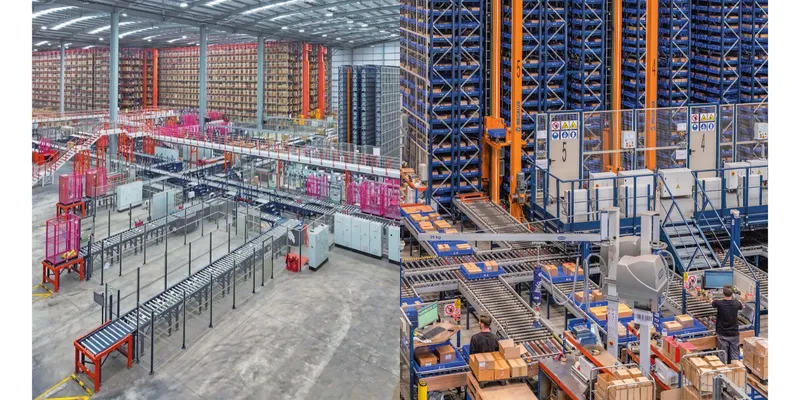
MIT CTL–Mecalux study of nearly 2,000 supply chain professionals finds widespread AI adoption, growing investment and the need for stronger governance and system integration
More than half of organisations expect artificial intelligence (AI) to make or execute over a quarter of their operational warehouse decisions autonomously by 2028, while 90% plan to increase AI investment over the next two to three years. These findings come from a new global study by the Intelligent Logistics Systems Lab at the Massachusetts Institute of Technology (MIT) Center for Transportation & Logistics (CTL) and Mecalux, which examines the adoption, performance and governance of generative AI (GenAI) and agentic AI in warehouse operations.
Titled The State of Generative and Agentic AI in Warehouse Operations, the report draws on responses from nearly 2,000 experienced supply chain and warehousing professionals across 21 countries. It explores how organisations are deploying these technologies, the applications delivering measurable results and the level of autonomy being granted to AI systems.
AI Adoption Is Widespread, but Measurable Results Remain Limited
The study found that 61% of organisations have adopted GenAI at large-scale deployment or full integration, compared with 56% for agentic AI. However, adoption is still relatively recent, with about three in four applications having remained at their current deployment stage for less than a year.
Respondents reported improvements across most use cases. At least moderate improvement in target metrics was reported for 87% of the GenAI applications and 81% of agentic AI applications described in detail. However, significant gains that were quantified and documented were reported in only 39% of GenAI use cases and 36% of agentic AI use cases.
Among respondents able to estimate the gains, the typical improvement was around 20% in the main target metric.
AI Agents Gain Decision-Making Authority Within Defined Limits
Organisations are increasingly allowing AI agents to make operational decisions independently, while retaining human oversight for more sensitive activities.
According to the study, AI agents most frequently make decisions without human approval in inventory movements, accounting for 51% of agentic AI use cases, and data corrections, at 42%. Their authority is more restricted in customer-facing commitments and financial decisions, with only 22% and 12% of use cases respectively permitting autonomous decisions in these areas.
The most common oversight approach is “human-on-the-loop”, where AI systems operate within defined limits while employees monitor their activities and can intervene when necessary.
“The objective is to move beyond general sentiment and to provide practical guidance on where these technologies are delivering operational value today and where they remain experimental,” said Matthias Winkenbach, Director of the Intelligent Logistics Systems Lab.
Governance and Integration Linked to Better AI Outcomes
The report identifies governance and system integration as important factors distinguishing organisations that document significant improvements from those that do not.
Companies with comprehensive and actively enforced AI governance are about twice as likely to report significant, documented improvements. For GenAI, the figures are 51% for organisations with comprehensive governance compared with 26% for others. For agentic AI, the corresponding figures are 46% and 23%.
The pattern remains after controlling for deployment status, region, industry and budget. However, the report clarifies that this reflects an association and does not establish proof of cause.
Integration remains the biggest obstacle to scaling GenAI. Forty percent of respondents identify integration with legacy systems as their primary constraint. Meanwhile, 54% say better integration with warehouse management and enterprise resource planning (ERP) systems would have the greatest impact on accelerating adoption.
AI Investment and Warehouse Autonomy Expected to Increase
Looking ahead, 90% of organisations expect to increase AI investment over the next two to three years, broadly in line with the 87% reported in last year's study. Nearly one-third (29%) anticipate raising their investment by more than 25%.
Expectations for autonomous decision-making are also higher among organisations that have fully integrated these technologies. Among this group, 70% expect agentic AI to make or execute more than a quarter of operational warehouse decisions autonomously by 2028, compared with 57% across all respondents.
AI Reshapes Warehouse Roles and Skills
The study indicates that AI is changing job responsibilities more often than eliminating positions. Fifty-six percent of organisations report that AI has mainly shifted employees towards higher-value tasks. Meanwhile, 11% report a reduction in headcount and 9% report an increase.
Workforce development is also gaining attention, with 73% of organisations upskilling warehouse-floor employees and 61% creating new technical roles.
For organisations planning their next steps, the report recommends establishing clear AI governance before expanding deployment, prioritising data quality and system integration, and evaluating application results over the first 12 to 24 months before deciding whether to scale or discontinue them.
“Warehouse decision-makers need AI they can measure. This research gives our clients a clear map of where the technology is working today and what it takes to prove it,” said Javier Carrillo, CEO of Mecalux.