2026 FIFA World Cup Expected to Boost Tourism, Retail and Clothing Industry Spending
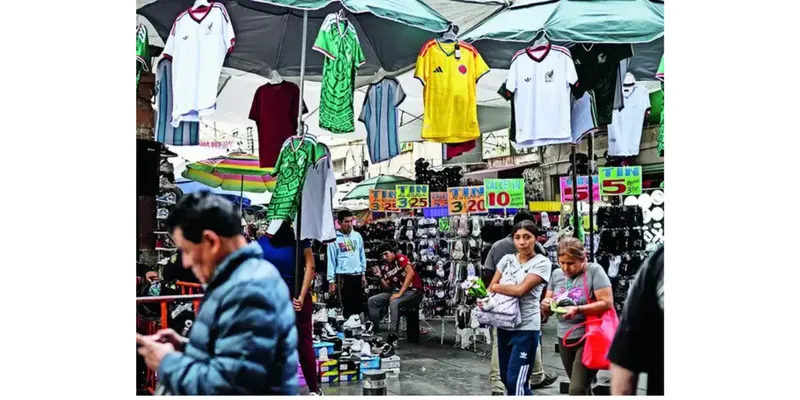
Global tournament could drive billions in consumer spending across tourism, apparel, hospitality, airlines and beverages
The 2026 FIFA World Cup is expected to inject billions of dollars into host economies, driven by a surge in consumer spending that will benefit sectors ranging from tourism and retail to athletic wear.
Scheduled from June 11 to July 19, the tournament is set to become the largest soccer event ever, with consumer spending expected to remain resilient despite broader demand concerns.
The first three-nation World Cup, spanning the United States, Canada and Mexico, is projected to boost global GDP by roughly $41 billion, according to FIFA's socioeconomic impact analysis conducted with the World Trade Organization (WTO).
There is also a positive outlook for stocks and scooter brokerages, which are expected to benefit from the once-in-four-years event.
Hotel Operators
Riley estimates a total of 13.1 million visitors to the World Cup, including ticketed and non-ticketed attendees, generating 21.3 million room nights booked in hotels across online travel platforms.
Analysts said U.S. hotel operators Marriott, Hilton and Hyatt, along with online travel platforms Airbnb, Booking Holdings and Expedia, are positioned to benefit from the event.
Marriott sees the World Cup driving momentum to continue into the third quarter. Airbnb expects hosts in the New York-New Jersey area, Boston and Los Angeles to earn the most during the tournament.
Airlines
Goldman Sachs believes the World Cup will be a net positive for U.S. airlines.
"June is typically a seasonally lower inbound leisure and corporate travel period, with a meaningful amount of peak July/August outbound travel season occurring after the WC is over," Goldman said.
A sharp rise in jet fuel prices due to the war with Iran, however, has forced U.S. airline operators to increase fares and prompted budget-conscious Americans to delay or cancel summer trips.
Beer Stocks
More than 11 billion pints of beer are likely to be consumed globally during the season, resulting in a 0.3% lift to the industry in terms of volumes, according to Jefferies. Improvements are expected in markets such as the U.S., Mexico, Brazil and China.
After five successive years of volatility, beer demand is expected to stabilize, Jefferies analysts said.
The tournament also sits at a favourable intersection of timing and geography. Roughly 75% of matches will be played in the U.S., while 84% of matches involving participating countries are scheduled in the beer-drinking-friendly time zones, the analysts added, according to Reuters.