GUJARAT HY-SPIN LIMITED

- Introduction:
- Brief Introduction of the Company:
A small company called Gujarat Hy-Spin Limited began in 2011, located in Gondal within Rajkot district. Based in Gujarat, it works in India's textile sector with limited market size. At first, its main activity involved trading cotton bales along with seeds. By 2013, things shifted toward making combed cotton plus specific types of yarn. The shift came alongside setting up a plant filled with updated spinning tools.
- Industry Overview:
A tough market greets Indian fabric makers today - thin profits, massive output. Even though cotton grows strong across India, tiny operations such as Gujarat Hy-Spin wobble when farm pricing shifts. Market pressure builds not just from local cloth weavers’ needs but also shipping fees tied to overseas orders.
- Purpose of the Analysis:
This review looks at how steady a tiny clothing factory runs, especially when fabric prices climb through early 2026. The financial analysis of the company can be studied through this report.
- Company Overview:
- Background and History:
Starting out, people who grew and processed cotton began the business. Because of their hands-on past, moving into trade then yarn making felt like a natural next step. Shares appeared on the BSE SME exchange during 2018's opening months. Money raised helped cover growth costs along with daily operations funding.
- Business Model:
Gujarat Hy-Spin uses standard B2B manufacturing approach. Farm there provide steady yields, feeding production without long-distance logistics. Fine fibers spun into smooth combed cotton thread fill the factory floor. Folk who trade in cloth often buy these goods first. Then they pass them along to small weaving shops.
- Key products/services:
Operating mostly within these areas:
- Combed cotton yarn
- Ring-spun yarn
- Threads for garment industry
Factories that weave fabric get these items directly. Textile makers also receive them regularly.
- Promoter/ founder Introduction:
- Name of promoter(s)/founder(s):
- Maganlal Parvadiya (Chairman)
- Chandulal Parvadia.
- Professional background:
The promoters come from cotton farming and ginning backgrounds. They have over two decades of experience in cotton-related businesses before entering yarn manufacturing.
- Role in company growth and strategic decisions
- Maganlal Parvadiya leads as Chairman and serves full time, drawing from more than twenty years in cotton ginning and pressing.
- Though not part of daily operations, Bindiya K. Parvadiya guides governance at the board level.
- Chandulal Parvadia helps run things behind key strategies, working closely in production and operations.
- Financial statement analysis:
Income Statement analysis:
Particulars | FY 2022-23 | FY 2023-24 | FY 2024-25 |
Revenue | 58.72 | 52.41 | 54.1 |
EBITDA | 3.1 | 2.05 | 2.2 |
Net Profit (PAT) | 0.52 | 0.18 | 0.22 |
EPS (₹) | 0.9 | 0.31 | 0.38 |
- Trend:
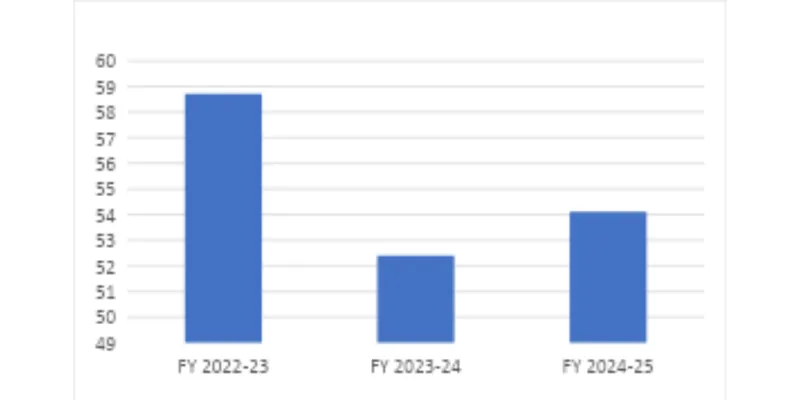
Money coming in has bounced back since last year. Even so, profits are barely there - just 0.1%. That means when goods sell, almost every rupee gets swallowed up by cotton prices and electricity bills.
- Balance Sheet Analysis:
Over time, the firm cut down what it owed compared to what it owned. By 2025, that number dropped sharply. Now they are holding onto lots of stock - around ₹10 to 11 crore - because cotton prices swing unpredictably. Spinning firms usually do this just to stay steady when costs jump.
- Cash Flow statement analysis:
Particulars | Mar-23 | Mar-24 | Mar-25 |
Cash from Operating Activity + | 4.52 | 2.88 | 3.27 |
Cash from Investing Activity + | -0.99 | 0 | -1.44 |
Cash from Financing Activity + | -3.89 | -2.69 | -1.87 |
Net Cash Flow | -0.37 | 0.2 | -0.04 |
Fresh money coming in, though less than before. Still below earlier levels, showing stress around producing cash. Liquidity feels tight where cash stays scarce. Flexibility shrinks when funds linger near empty.
- Financial Ratios:
Ratio | Value | Interpretation |
ROE | ~0.5% | Very low return |
ROCE | ~4% | Weak efficiency |
EBITDA Margin | Low | Thin margins |
Debt-to-Equity | Moderate | Controlled leverage |
Interest Coverage | Low | Financial pressure |
- Key Insights and Interpretation:
- Strengths:
Farm-grown cotton sits close by. This cuts down on travel expenses when collecting supplies. Being right in Gujarat’s main growing zone helps keep transport short and simple. Fewer loans weigh it down. While others in textiles carry heavy borrowing loads, this firm stands apart - its balance sheet stays light.
- Weaknesses:
A flat profit line shows up even though sales go up. The business hardly makes any money now. Focused tightly on textile spinning, the business leans almost entirely on this single area. Without much spread across other fields, change feels distant. Stuck in a loop of similar work, variety does not show up here.
- Risk Factors:
A sudden jump in raw cotton costs might erase that tiny 0.1% gain right away. Profit vanishes when material gets pricier out of nowhere. Running factories takes lots of electricity, which eats up a big chunk of costs. When power prices shift in Gujarat, production budgets can wobble without warning.
- Future Outlook:
Growth potential depends on:
- Expansion in textile demand
- Better pricing power
- Cost control and efficiency improvements.
Still, if margins stay flat, staying viable over time could be tough.
- Conclusion:
- Final evaluation of financial health
Still standing after the chaos of recent years, Gujarat Hy-Spin stays afloat despite slim results. Surviving market swings didn’t boost its strength - just kept it breathing. Debt got smaller, yes, yet growth remains out of reach. Now, it moves lots of product, though raw material prices squeeze profit hard.
- Investment or performance Perspective:
One example stands out for students watching India's fabric makers - thin profits paired with fast sales define its rhythm. A bargain by paper value, yet waits on wider shifts to shine; cheaper cotton could tilt the scales. Meaningful change needs more than numbers - it leans on outside forces gaining speed.